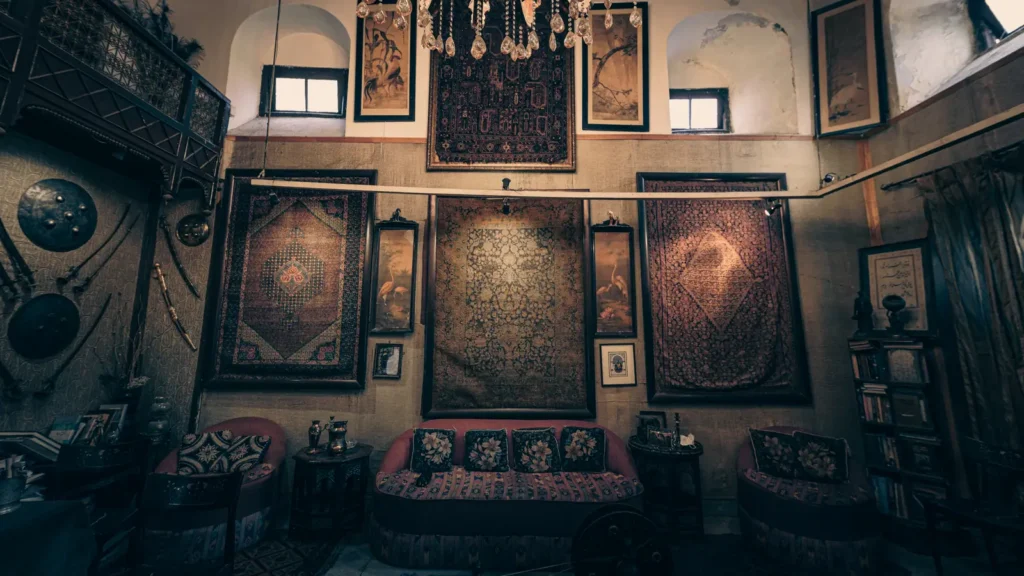
The General’s Carpet: a Mughal carpet the museum says has a face
The museum describes The General’s Carpet as Mughal work from Shah Jahan’s weaving factory in Lahore, with a human face woven into its floral pattern.
The museum describes The General’s Carpet as Mughal work from Shah Jahan’s weaving factory in Lahore, with a human face woven into its floral pattern.

Most historians say Ranjit Singh was born at Gujranwala on 13 November 1780. Tradition names a haveli of his father Maha Singh, and the father’s samadhi stands at a corner of Sheranwala Bagh.

Heera Mandi is the Shahi Mohalla bazaar near Taxali Gate in Lahore’s Walled City; its name is traditionally linked to Hira Singh Dogra, a Sikh-era prime minister.

A dated timeline of the three Fakir brothers, from Azizuddin’s birth in 1780 and first post in 1799 to Nuruddin’s death on 26 March 1852, with their missions and treaties.

Jamawar was patterned cloth woven in lengths to be tailored into a jama, or robe; the classic Kashmir shawl was hand-woven in the kani technique with the bent-tip buta motif.
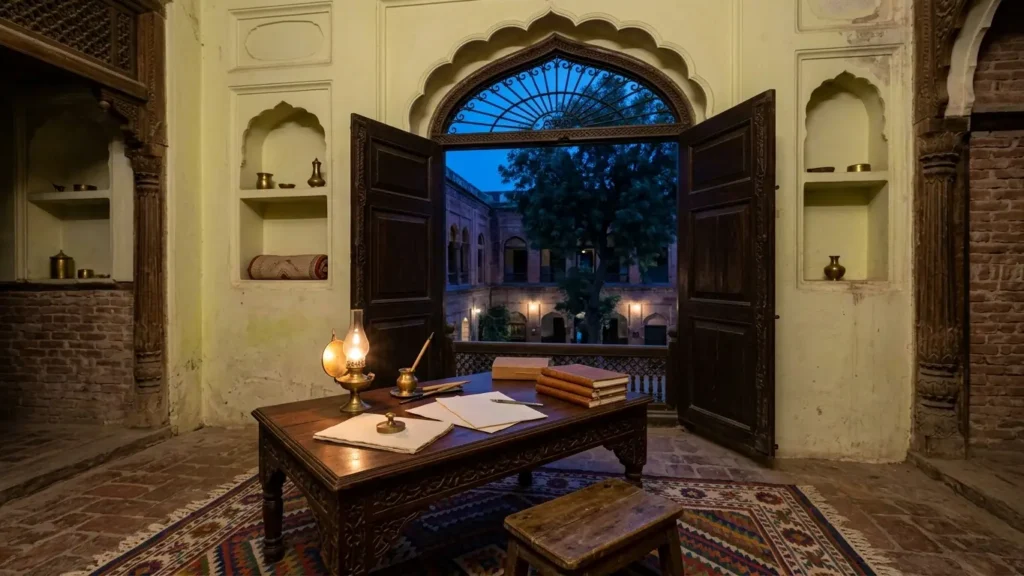
Javed Manzil on Allama Iqbal Road is the only house in Lahore that Muhammad Iqbal owned; it is now the Allama Iqbal Museum, and its hours should be checked before you go.

Fakir Khana Museum’s 19th-century portrait of Nawab Mumtaz Ali Khan is traditionally said to have been painted over fifteen years with a brush of a single hair.

A Kashmiri pashmina shawl is woven from pashm, the fine undercoat of high-plateau goats that the West calls cashmere, and it is generally finer than sheep’s wool.
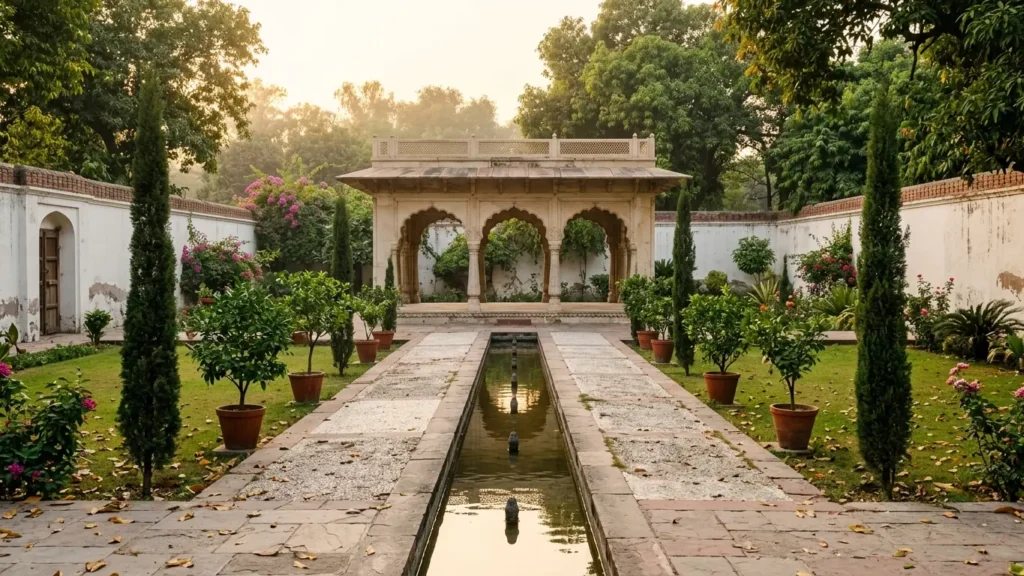
Ram Bagh is Maharaja Ranjit Singh’s garden and summer palace in Amritsar, laid out from 1819 on the pattern of Lahore’s Shalimar Bagh and named after Guru Ram Das.
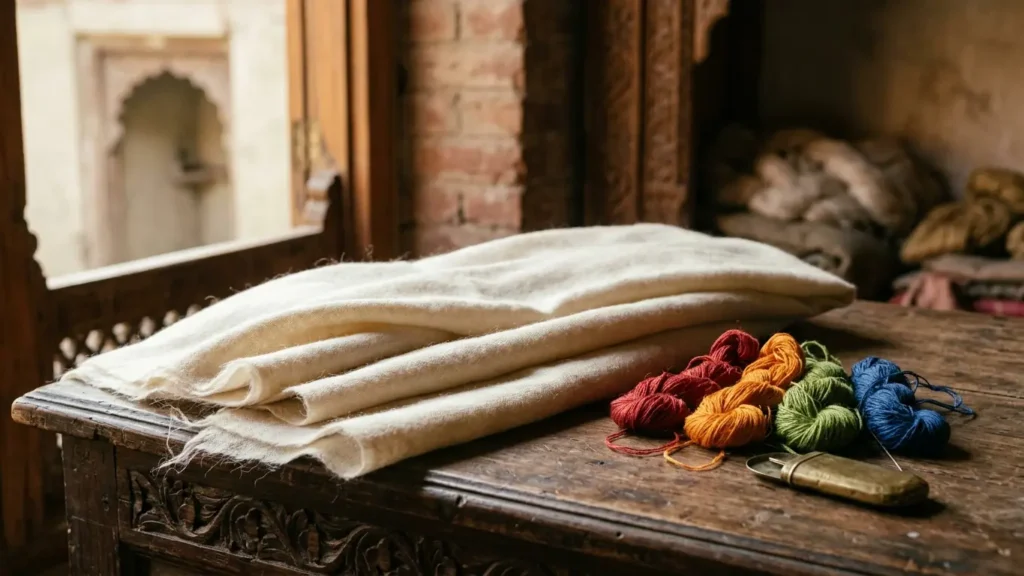
Fakir Khana Museum holds a fine Kashmiri shawl that it believes belonged to Maharani Jind Kaur; the museum’s online record says she presented it to Qamaruddin of the Fakir family.