Fakir Khana Museum in Lahore calls one of its carpets The General’s Carpet. The museum describes it as a Mughal carpet from Shah Jahan’s weaving factory in Lahore, with a human face woven into its pattern.
A face in the pattern
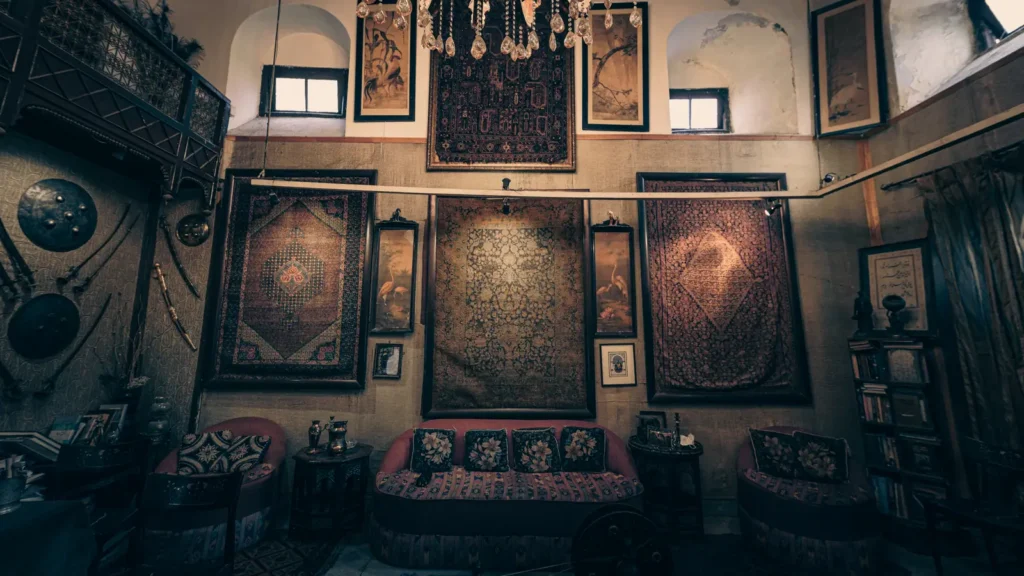
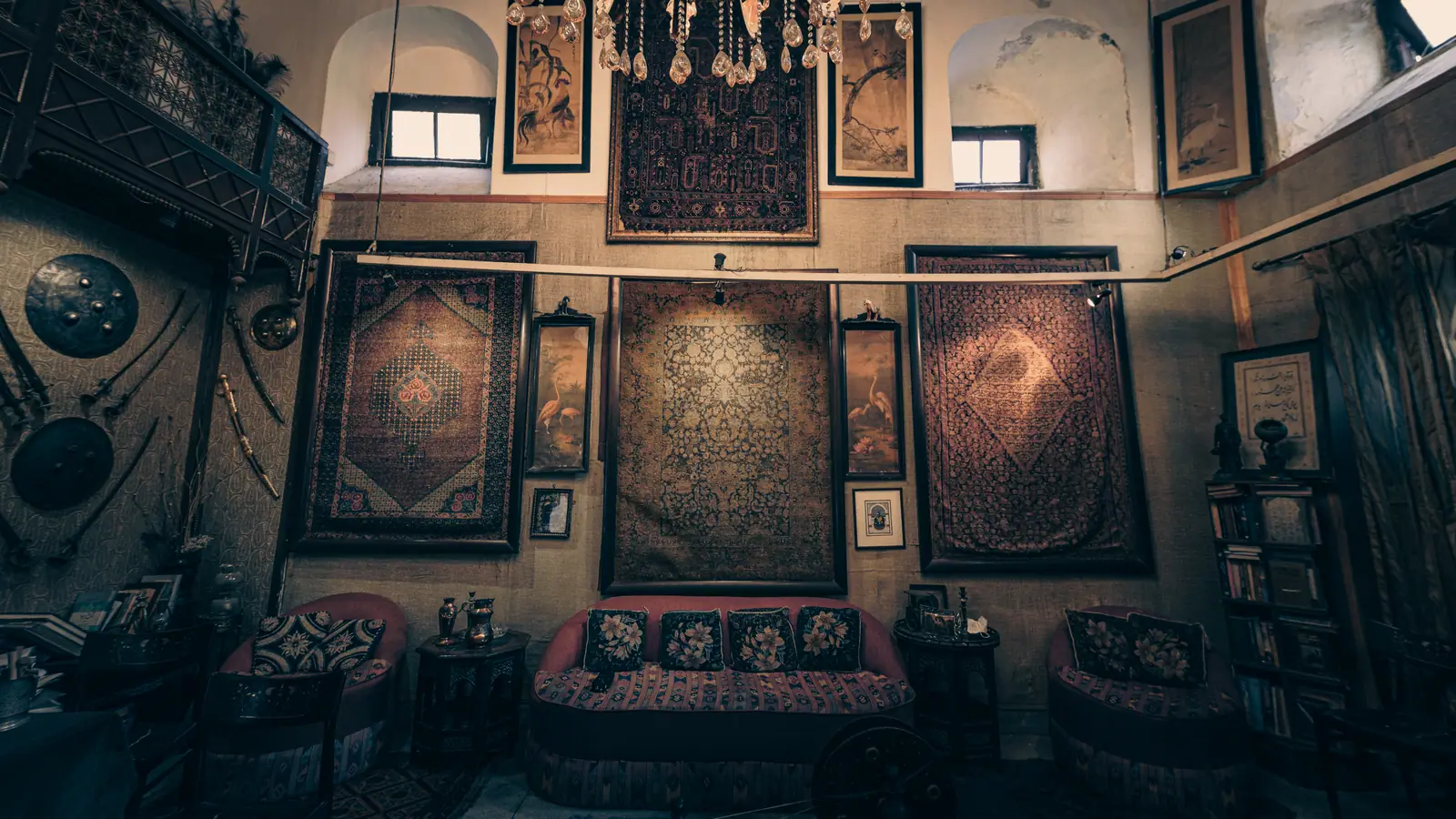
Flowers, vases and birds are what you see first, the museum says; on further concentration, a human face woven into the pattern becomes evident. The museum’s object page says the carpet was originally red and green and has faded with age into different shades of brown. In the photograph, the carpet hangs in a dark red frame, its ground faded to ochre and brown, with a dense floral field and a border.

Nothing published says where the face sits, whose face it is or why it was woven.
Lahore’s carpet workshops under Shah Jahan
Shah Jahan reigned from 1628 to 1658. Fakir Khana’s own Google Arts & Culture record says that during his rule he invited many skilful carpet weavers from Iran. Qatar Museums’ catalogue, in the entry for one of its carpets, says that in the mid-seventeenth century many Persian weavers had settled in northern India, where they found patronage in the imperial ateliers of the Mughals, and that royal weaving workshops were known to have been established in Kashmir and Lahore.
The Lahore Museum says that a large carpet manufactured in Lahore during Shah Jahan’s reign stands at the centre of its Islamic Gallery. Wikipedia’s article on the Girdlers’ Carpet records that it was ordered by Robert Bell from the royal workshops in Lahore in 1634 and given to the Worshipful Company of Girdlers in London, which still holds it in Girdlers’ Hall. It is a different carpet from the one at Fakir Khana.
The 1638 date and the name
The museum’s Google Arts & Culture record gives the date as 1638. That is the museum’s own date, and the museum’s Collection page says that attributions, dates and provenance will be published after expert review. The museum’s Google Arts & Culture story also calls the carpet The General’s Carpet, and the name is not explained.
Finding it in the Hall of Carpets
The museum’s Google Arts & Culture story says the Hall of Carpets was originally the sitting room, the Gol Kamra. The Friday Times described the Gol Kamra in 2018 as the museum’s main living room, and the museum’s page on it describes a mixed selection of objects, including carpets, wall hangings, carved mantelpieces and metal ornaments. Some of the museum’s carpets, shawls and embroideries are shown there, and others in its miniature and calligraphy rooms. A 2017 article in Youlin Magazine describes antique carpets made in Lahore in Shah Jahan’s time on the walls of the first hall.
Carpets are shown in more than one room of the house, so ask when you arrange your visit whether The General’s Carpet can be seen. Visits are by appointment. Call or write to arrange one. The museum notes that historic textiles are vulnerable to light, humidity and handling. Please do not touch the objects. Please ask before taking photographs.
Where the sources differ
Fakir Khana’s own record says Shah Jahan built two carpet factories, in Lahore and Agra. Qatar Museums names royal workshops in Kashmir and Lahore, and Wikipedia’s article on the Girdlers’ Carpet says Mughal carpets were woven at Agra, Lahore and Fatehpur Sikri.
Read more about the Gol Kamra in the museum’s guide to the haveli rooms.
Frequently Asked Questions
What is The General’s Carpet at Fakir Khana Museum?
The museum catalogues it as a Mughal carpet from Shah Jahan’s era, made in Shah Jahan’s weaving factory in Lahore, and also calls it The General’s Carpet. It says a human face is woven into the pattern and becomes evident on closer looking.
Why is it called The General’s Carpet, and whose face is woven into it?
The museum calls it The General’s Carpet and the name is not explained. The museum says a human face is woven into the pattern, but nothing published says where the face sits, whose face it is or why it was woven.
Was the carpet definitely woven in 1638?
Not established. The museum’s Google Arts & Culture record gives 1638, and that date is the museum’s own. The museum’s Collection page says attributions, dates and provenance will be published after expert review.
Can I see The General’s Carpet on a visit?
Ask when you arrange your visit whether it can be seen, because carpets are shown in more than one room. Visits are by appointment. Call or write to arrange one. Please do not touch the objects, and please ask before taking photographs.
Sources and Further Reading
- Mughal Carpet from Shah Jahan’s Era – Google Arts & Culture — The museum’s catalogue entry: title, creator, date, the original colours, the two factories and the weavers from Iran.
- Fakir Khana Museum story – Google Arts & Culture — The name The General’s Carpet, the flowers, vases, birds and face, and the Hall of Carpets as the Gol Kamra.
- The Gol Kamra – Google Arts & Culture — The museum’s description of the objects in the Gol Kamra.
- Carpet – Qatar Museums — Shah Jahan’s reign as 1628 to 1658, Persian weavers in the Mughal ateliers, and royal workshops in Kashmir and Lahore.
- Islamic Gallery – Lahore Museum — A large carpet manufactured in Lahore in Shah Jahan’s reign, at the centre of the gallery.
- Girdlers’ Carpet – Wikipedia — The Girdlers’ Carpet ordered from the royal workshops in Lahore in 1634; Mughal carpets woven at Agra, Lahore and Fatehpur Sikri.
- The Friday Times: Art House (13 April 2018) — The Gol Kamra described as the museum’s main living room.
- Youlin Magazine (2017) — Antique carpets made in Lahore in Shah Jahan’s time on the walls of the first hall.