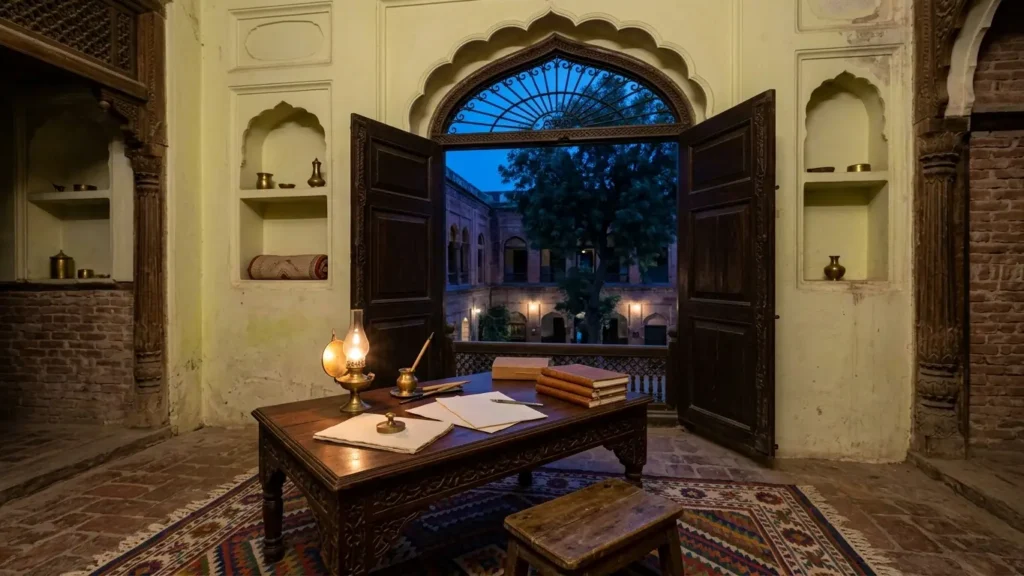

The Allama Iqbal Museum is in Javed Manzil on Allama Iqbal Road in Lahore, the house where the poet Muhammad Iqbal lived from May 1935 until his death on 21 April 1938. It is the only house he owned in the city. Iqbal Day, on 9 November, marks his birth anniversary.
Javed Manzil, Iqbal’s last home
Javed Manzil is on Allama Iqbal Road, the road that runs from the railway station towards Garhi Shahu Chowk. Iqbal bought the plot, about seven kanals of land, in 1934. The federal monument listing records that building the house cost about Rs 42,025 in 1930s British Indian rupees. Iqbal named it after his son, Javid Iqbal (the name is also spelt Javed).
Iqbal and his family moved in during May 1935. The federal listing records that his wife, Sardar Begum, the mother of Javid Iqbal, died in the house on 24 May 1935. Iqbal himself died there on 21 April 1938.
The government is reported to have bought the house from Iqbal’s son for Rs 3.5 million, and it was later converted into a house museum. The house was declared a national monument in 1977.
What the museum displays
The Directorate General of Archaeology, Punjab, describes the museum gallery by gallery. The first three hold Iqbal’s original manuscripts, certificates, letters and documents. The fourth has first editions of several of his books, and the fifth has models of important buildings and photographs. The sixth shows objects he used every day, especially clothing, in showcases.
The last three are rooms Iqbal used in his final days: his bedroom, the drawing room and the dining room. The department says they keep the arrangement of fixtures and furniture from his lifetime.
Wikipedia says the displays cover his life from 1877 to 1938 and include handwritten drafts, awards, medals and degrees.
Visiting arrangements
In 2026, 9 November falls on a Monday, within the winter period. The Directorate General of Archaeology, Punjab, publishes winter hours of 9 am to 4 pm, from 1 October to 31 March, with Wednesday as the off day. For the museums it manages, it also lists a separate Friday schedule of 9:00 am to 12:30 pm and 2:30 pm to 4:00 pm.
The department’s pages carry no date, and a restoration is planned. TIKA, the Turkish Cooperation and Coordination Agency, signed an agreement with the Directorate on 27 February 2026 to rehabilitate the museum, with completion expected by 2027. The Nation reported that this coincides with the 150th anniversary of Iqbal’s birth. Ask the department whether the museum keeps its usual hours on 9 November or holds a programme that day.
The department’s pages do not state a fee; older reports describe entry as free. Its website has a visitor application form for citizens, foreigners and university, school or college visitors. Ask whether it applies to Javed Manzil.
Iqbal’s Lahore, in order
Dawn lists the stations of Iqbal’s life in Lahore, in this order:
- Government College Quadrangle
- Bhati Gate
- Urdu Bazaar
- Anarkali
- McLeod Road
- Javed Manzil, on Allama Iqbal Road
Dawn says he moved to a house on McLeod Road in December 1922 and stayed there for 13 years, until May 1935.
A last stop, not on Dawn’s list, is his tomb in Hazuri Bagh. Iqbal is buried there beneath the high walls of the Badshahi Mosque, in a mausoleum designed by Nawab Zain Yar Jang of Hyderabad, Deccan. The Walled City of Lahore Authority notes that the garden also holds the Samadhi of Ranjit Singh. Official guards are provided by the Government of Pakistan, and The Nation reported in 2022 that a change-of-guards ceremony takes place at his tomb. How the tomb came to be built is told in a separate article.
Bhati Gate and the student years
Dawn says Iqbal came to Lahore at the age of 18 in 1895, was admitted to Government College as a BA student and lived in the hostel. The room is now conserved as the “Iqbal Room”. He later lived in a rented house inside Bhati Gate until 1905, and the Pakistan Observer reported in November 2022 that the house was being conserved. A separate article covers the house near Bhati Gate and the years he lived there.
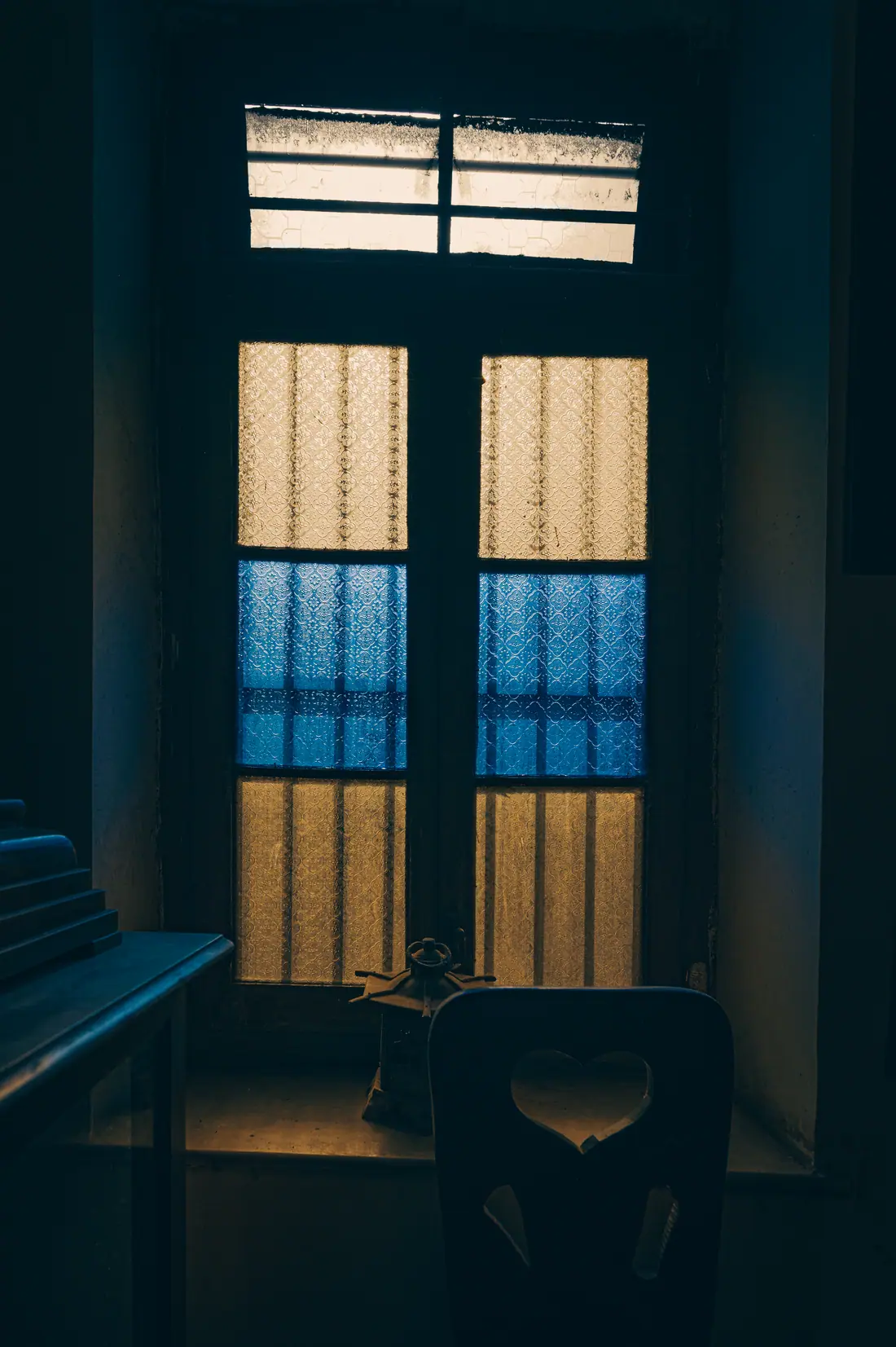
Fakir Khana Museum is inside Bhati Gate as well. Visits are by appointment. Call or write to arrange one, using the details on the Visit page.
Where the sources differ
Sources differ on when Iqbal moved into the rented house inside Bhati Gate: Dawn gives 1899, the federal monument listing 1900 and the Pakistan Observer’s 2022 report 1901. The listing and the Observer both give 1905 as the end. A 2017 Daily Times article says Javed Manzil is open every day from 9 am to 4 pm, while the department’s own pages list a Wednesday closure and a separate Friday schedule.
Frequently Asked Questions
Where is the Allama Iqbal Museum in Lahore?
The Allama Iqbal Museum is in Javed Manzil on Allama Iqbal Road in Lahore, the road that runs from the railway station towards Garhi Shahu Chowk. Muhammad Iqbal bought the plot in 1934, moved in during May 1935 and died there on 21 April 1938.
What are the opening hours of the Allama Iqbal Museum on Iqbal Day?
The Directorate General of Archaeology, Punjab, publishes winter hours of 9 am to 4 pm, from 1 October to 31 March, a Wednesday closure and a separate Friday schedule. Its pages carry no date and a restoration is planned, so ask the department whether the museum keeps its usual hours or holds a programme on 9 November.
Is there an entry fee for Javed Manzil?
The department’s pages do not state a fee; older reports describe entry as free. Its website has a visitor application form for citizens, foreigners and university, school or college visitors. Ask the department whether the form applies to Javed Manzil before you go.
What can visitors see inside Javed Manzil?
The Directorate General of Archaeology, Punjab, describes original manuscripts, certificates, letters and documents, first editions of several of Iqbal’s books, models of important buildings, photographs and showcases of objects he used every day. The last rooms are his bedroom, drawing room and dining room, which the department says keep their arrangement from his lifetime.
When is Iqbal Day?
Iqbal Day marks the birth anniversary of Allama Muhammad Iqbal on 9 November. He was born on 9 November 1877 and died on 21 April 1938. In 2026, 9 November falls on a Monday.
Sources and Further Reading
- Iqbal Museum (Javed Manzil), Directorate General of Archaeology, Punjab — Location on Allama Iqbal Road, the plot of about seven kanals, the 1977 national monument declaration, the gallery-by-gallery description, winter hours and the visitor application form.
- Museum Timings, Directorate General of Archaeology, Punjab — Winter hours for Javed Manzil, the Wednesday off day and the separate Friday schedule for museums.
- Javid Manzil, Department of Archaeology and Museums — The 1934 plot purchase, the Rs 42,025 building cost, the May 1935 move, Sardar Begum’s death on 24 May 1935 and the 1900 start of the Bhati Gate years.
- Javed Manzil, Wikipedia — The Rs 3.5 million government purchase, the 1977 monument status and the 1877 to 1938 span of the displays.
- Dawn, column on Allama Iqbal’s life in Lahore (1 April 2018) — The order of Iqbal’s Lahore addresses, his arrival in 1895, the hostel room, McLeod Road from December 1922 and the 1899 Bhati Gate start year.
- Historic MoU signed in Lahore: Muhammad Iqbal Museum to be rehabilitated with TIKA’s support — The 27 February 2026 agreement between TIKA and the Directorate General of Archaeology, Punjab.
- TIKA to rehabilitate Allama Muhammad Iqbal Museum in Lahore, The Nation — Completion of the restoration set for 2027, the 150th anniversary of Iqbal’s birth.
- The Nation, 19 April 2022: Revisiting Iqbal Museum — The government purchase for Rs 3.5 million, Iqbal Day as his birth anniversary and the change of guards at the tomb.
- Allama Iqbal’s Biography, Walid Iqbal — Iqbal’s birth and death dates, his burial beneath the walls of the Badshahi Mosque and the mausoleum’s designer.
- Gates, Walled City of Lahore Authority — The Samadhi of Ranjit Singh and Iqbal’s mausoleum both lie in Hazuri Bagh.
- Pakistan Observer, 7 November 2022: Iqbal’s Bhatti Gate residence being conserved for posterity — The November 2022 report on conserving Iqbal’s Bhati Gate house and its 1901 to 1905 dates.
- Daily Times, 11 October 2017: Javed Manzil, visiting Allama Iqbal Museum — The 2017 report of free entry and of daily opening from 9 am to 4 pm.