
Carpet weaving became a statewide industry under dynasties such as the Safavids of Iran and the Mughals of India. Persian designs, and weavers who probably came from Herat, shaped carpet-making under the Mughal emperor Akbar, whose royal workshops included Lahore. At Fakir Khana, the museum describes Iranian and Shirazi pieces and catalogues a Mughal carpet known as the General’s Carpet to Shah Jahan’s reign.
Before the Safavids
The Pazyryk pile carpet, found in a burial mound in the Altai Mountains and now in the Hermitage in St Petersburg, is often described as the oldest surviving pile carpet in the world. It is dated to about the fourth to third century BCE, and where it was woven is still debated.
The Safavid court workshops and the export trade
The Metropolitan Museum of Art describes carpet weaving under the Ottoman, Safavid and Mughal dynasties as transformed from a minor craft into a statewide industry, with patterns created in court workshops. Carpets were traded to Europe and the Far East.
The Ardabil carpet in the Victoria and Albert Museum in London is a dated royal commission. Shah Tahmasp commissioned it as one of a pair for the shrine of Shaykh Safi al-Din at Ardabil, and its inscription, dated A.H. 946 (1539 to 1540), reads “The work of a servant of the court, Maqsud of Kashan”. The pile is wool on a silk foundation, with an average of 340 knots per square inch, and its twin is in Los Angeles. A 1998 Victoria and Albert Museum label said it was not known for certain where the pair was woven, noting that medallion designs of this type are usually associated with Tabriz.
Under Shah Abbas I, who reigned from the late 1580s to 1629, carpets and textiles became part of an economic programme. He moved silk merchants and weavers to his new capital, Isfahan, and signed trade treaties with Spain, England and France. Of the carpets exported, the “Polonaise” type was the most popular: over 300 are in foreign collections, many bearing the arms of the family that commissioned them.
A study by Annette Ittig takes the story to the late nineteenth century. It describes the Sultanabad enterprise of the Manchester firm Ziegler as the earliest known effort to organize carpet manufacture in Iran with foreign capital, and says it played a role in the export boom of those years. The firm began as a commission house in the Near and Middle East and set up an Iranian agency in 1867 before moving into carpet manufacture and trade.
Persian influence in Mughal Lahore
In the Met’s account, few carpets seem to have been produced in India before Akbar, who reigned from 1556 to 1605. His court historians record royal workshops at Fatehpur Sikri, Lahore and Agra, and Abu’l Fazl said that carpet weavers were found in every town, especially in Agra, Fatehpur and Lahore. The Ashmolean Museum writes that Akbar’s weavers probably came from Herat, in modern Afghanistan, and that Persian influence on Mughal carpet design remained strong through the seventeenth century.
Early Mughal rugs closely resemble contemporary Persian ones, in particular those made in Herat. Later in the seventeenth century European engravings circulated and a distinct Mughal idiom developed. A Met catalogue entry for a carpet of the late sixteenth or early seventeenth century, probably made in Lahore, shows the mixture: its ibexes, qilins and border derive from Safavid Persian art, while the palm tree and bright red field are Indian. The entry dates it to soon after Akbar established the first carpet workshops in Lahore, Agra and Fatehpur Sikri.
The Met’s essay also offers a rough guide to telling carpets apart. Persian weavers most often tied an asymmetrical knot and Turkish weavers a symmetrical one, and Indian carpets are recognised by their distinctive red hue. Both are general guides, not rules.
Weaving in Fars
Shiraz is the capital of Fars province, whose traditional skills of carpet weaving UNESCO inscribed as intangible heritage in 2010. UNESCO describes the weavers of Fars as among the most prominent in Iran. They work at horizontal looms laid on the ground and use natural dyes from madder, indigo, walnut skin and pomegranate skin. Women are responsible for design, colour and weaving, and they bring scenes of their nomadic lives to the carpet.
Persian and Mughal carpets at Fakir Khana
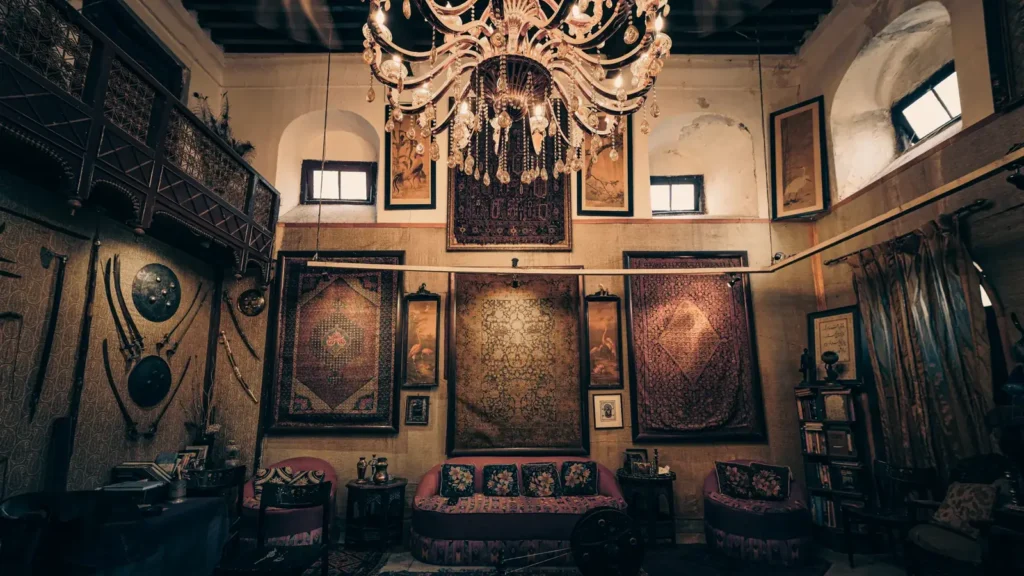
The Gol Kamra, once the family’s sitting room in the haveli, is now the Hall of Carpets. Carpets hang framed on its walls under a chandelier, and the museum’s captions describe Iranian and Shirazi pieces among them. The museum’s Google Arts & Culture story says other carpets, shawls and embroideries are shown in its miniature and calligraphy rooms, so ask when you arrange your visit what is on view.
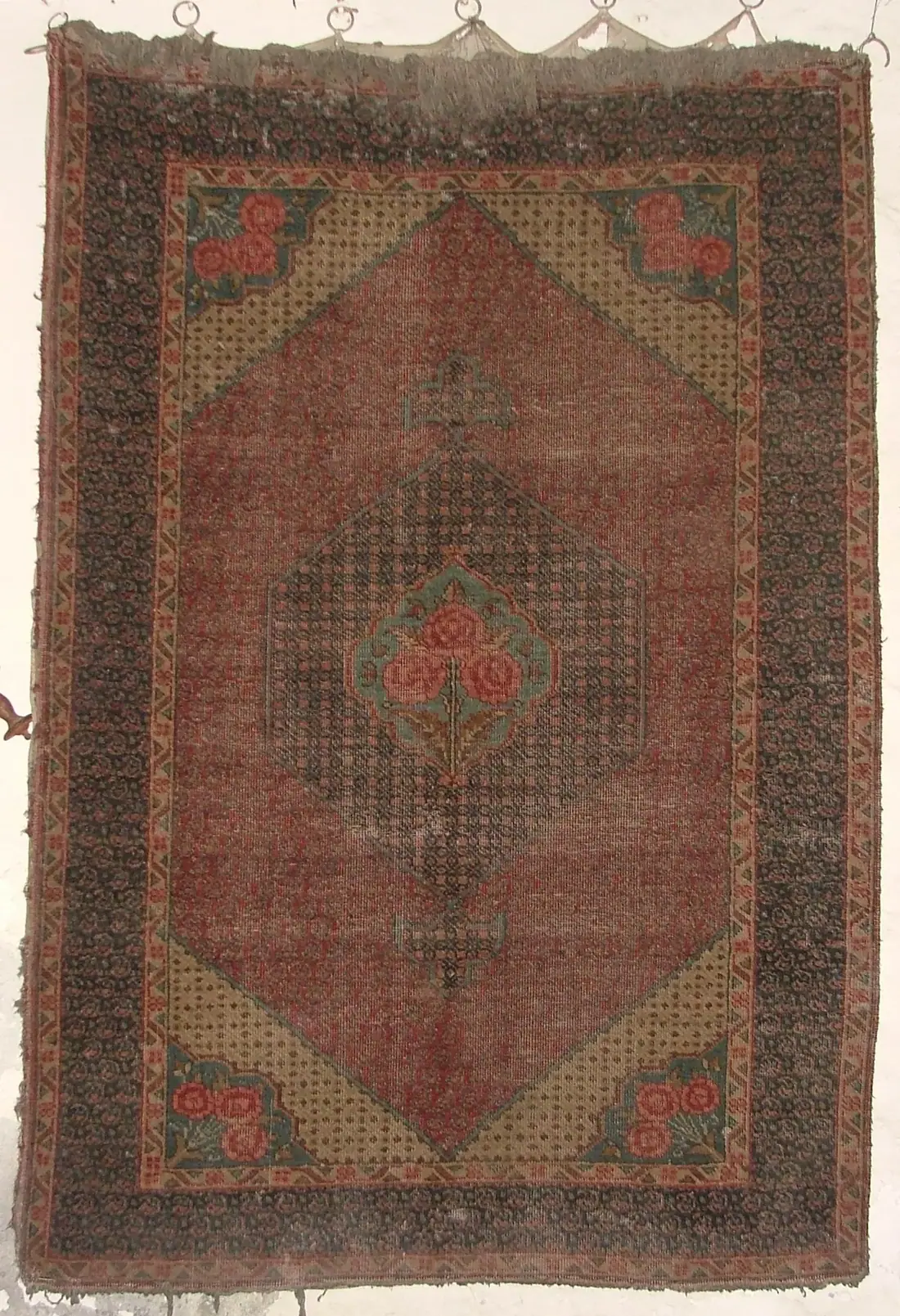
The museum catalogues one framed carpet as a Mughal carpet from the reign of Shah Jahan, whose court kept carpet workshops in Lahore. The museum’s record gives the date as 1638 and calls it The General’s Carpet, with a human face woven into the pattern. A second carpet shows a rose medallion on a brick-red field with dark borders.
Visits are by appointment. Call or write to arrange one. Please ask about admission when you arrange your visit, and please ask before taking photographs.
Where the sources differ
An early dating put the Pazyryk carpet in the fifth century BCE; the burial is now dated to the fourth to third centuries BCE. Riegl took the carpet for an imported Persian work and Schurmann for Armenian, and other origins have been proposed.
Frequently Asked Questions
How did the Safavid rulers change Persian carpet weaving?
The Metropolitan Museum of Art says that under the Ottoman, Safavid and Mughal dynasties carpet weaving was transformed from a minor craft into a statewide industry, with patterns created in court workshops. It adds that Shah Abbas I moved silk merchants and weavers to Isfahan and that the Polonaise type was the most popular export.
Where did Akbar’s carpet weavers come from?
The Ashmolean Museum says that Akbar’s weavers probably came from Herat, in modern Afghanistan, and that Persian influence on Mughal carpet design stayed strong through the seventeenth century. The Met adds that Akbar’s court historians record royal carpet workshops at Fatehpur Sikri, Lahore and Agra.
What is the Ardabil carpet?
The Ardabil carpet, now in the Victoria and Albert Museum in London, was commissioned as one of a pair by Shah Tahmasp for the shrine of Shaykh Safi al-Din at Ardabil. Its inscription is dated A.H. 946 (1539 to 1540) and names Maqsud of Kashan. Its twin is in Los Angeles.
What carpets does Fakir Khana Museum show?
The museum’s Hall of Carpets, once the family’s sitting room, has carpets hung framed on its walls, among them pieces the museum’s captions describe as Iranian and Shirazi. The museum catalogues one framed carpet as a Mughal carpet from the reign of Shah Jahan. Other carpets are shown in its miniature and calligraphy rooms.
Sources and Further Reading
- Metropolitan Museum of Art: Carpets from the Islamic World, 1600-1800 — The statewide industry, Shah Abbas I and the Polonaise carpets, Akbar’s workshops, the Persian resemblance of early Mughal rugs, and the knot and colour guides.
- Victoria and Albert Museum: The Ardabil carpet — The commission, inscription, date, materials, knot count and place of weaving of the Ardabil carpet.
- Ashmolean Museum: Mughal carpet catalogue entry — Akbar’s weavers probably coming from Herat, Abu’l Fazl on weavers, and the strength of Persian influence.
- Metropolitan Museum of Art: carpet, probably made in Lahore — A late sixteenth or early seventeenth century carpet with Safavid-derived ibexes, qilins and border and an Indian palm tree and red field.
- UNESCO Intangible Cultural Heritage: Traditional skills of carpet weaving in Fars — The 2010 inscription and the looms, dyes and women weavers of Fars.
- Iranian Studies: Ziegler’s Sultanabad carpet enterprise (Annette Ittig) — The Manchester firm Ziegler, its Iranian agency of 1867 and its Sultanabad enterprise in the late nineteenth-century export boom.
- Google Arts & Culture: Fakir Khana Museum story — The Hall of Carpets, the Gol Kamra, and the carpet the museum catalogues from Shah Jahan’s reign.
- Wikipedia: Pazyryk carpet — The Pazyryk carpet, its Hermitage home, and the debate over its date and origin.