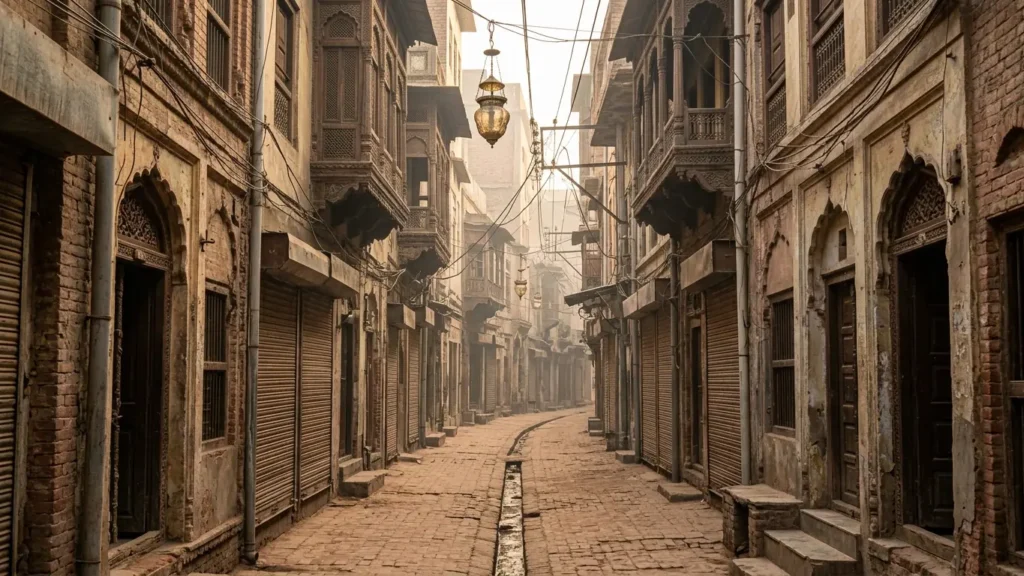
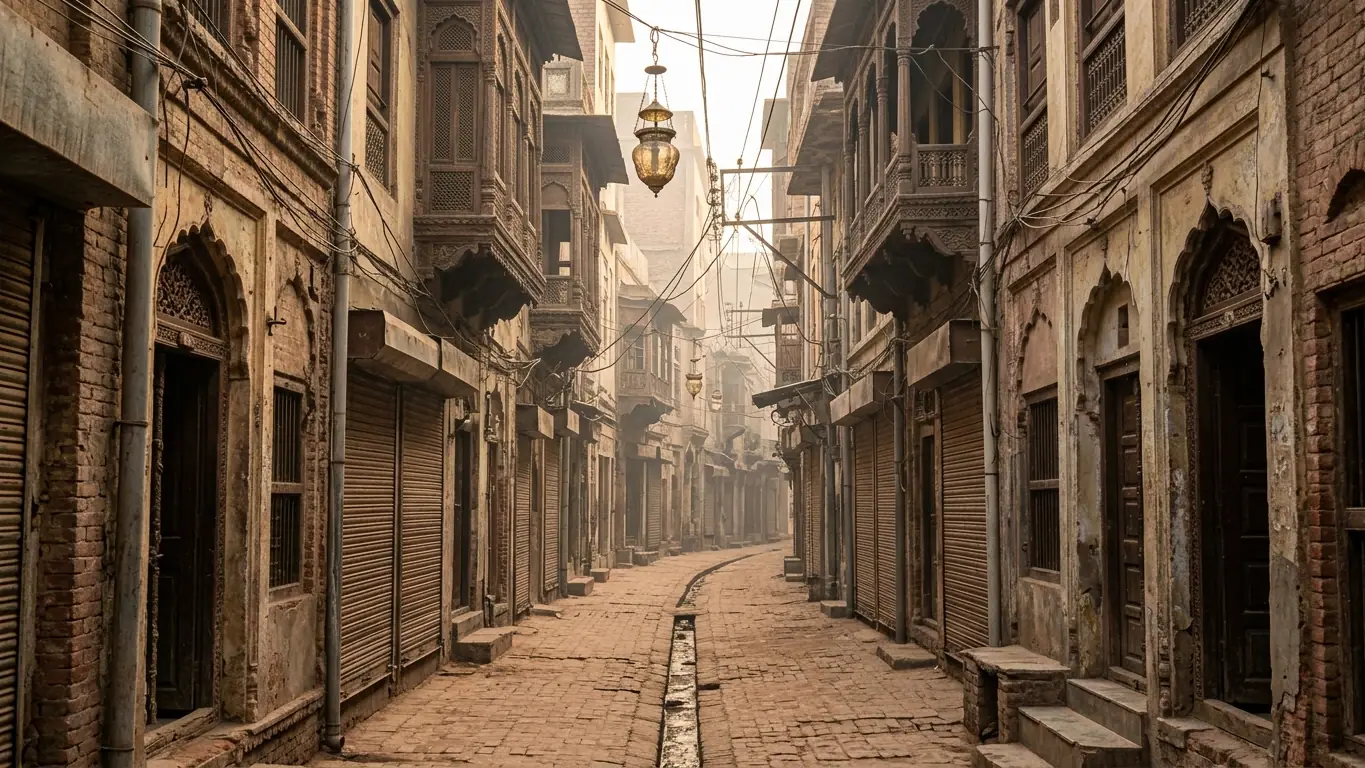
Bhati Gate, also spelt Bhatti Gate, is one of the thirteen gates of the Walled City of Lahore. The gate standing today dates from the British period. Hakiman Bazaar begins just inside it, and Fakir Khana Museum is about 500 metres inside the gate, by press accounts.
Where Bhati Gate is
The Walled City of Lahore Authority lists thirteen gates, counting the small Mori Darwaza, which it places between Lohari Gate and Bhati Gate. Data Darbar, the mausoleum of the Sufi saint Ali Hajweri, stands just outside Bhati Gate. Inside, Hakiman Bazaar begins.
The federal Department of Archaeology and Museums attributes the gate to the Mughal Emperor Akbar and says he built it to protect the Walled City. It was rebuilt in the British period. In August 2024 Business Recorder reported that Rs 1.730 billion of World Bank-funded rehabilitation work had started on the gate.
Why it is called Bhati
The gate is said to be named after the Bhatti Rajput tribe, and accounts differ on how and when. The Authority and the archaeology department both name the Bhattis, and the department adds that a colony of them originally lived in the quarter. At the launch of the 2024 rehabilitation, the Authority’s marketing director gave three explanations: Bhutti warriors of Multan who camped there before the Mughals, an Emperor Raja Bhatti, or the Bhatti clan that settled there.
Dawn’s Majid Sheikh writes that under Akbar the area west of the new wall was called Guzar Talwara, and that under Aurangzeb it was renamed Bhati Gate to honour the Bhat Rajputs of Lahore.
A neighbourhood of poets and physicians
The Authority calls Hakiman Bazaar the most popular market inside the gate and notes that, as the name suggests, there are a number of hakim shops there. Hakims are traditional physicians. Dawn reported in 2016 that many hakims shifted westwards to Bazaar Hakeeman, and a February 2016 essay in Tanqeed links the Fakir family’s prestige to their inherited profession as hakims.
The quarter was once nicknamed the Chelsea of Lahore, a name credited to Hakim Ahmed Shuja in a 2006 Daily Times column by A. Hamid. In 2024 the marketing director repeated it, saying that affluent and literary people lived there. Both name Allama Iqbal, Agha Hashr and Fakir Syed Azizuddin among its past residents, and also listed Fasih Ul Mulk, Daag Dehlvi, Chaudhry Sir Shahab Ud Din and Khawaja Khurshid Anwar.
Hamid also wrote that Sir Abdul Qadir started his literary magazine Makhzan from Bhati Gate. Rekhta’s biography of Abdul Qadir dates the journal to 1901 and says most of Iqbal’s nazms (poems) were first published in it.
Allama Iqbal lived in a rented house inside the gate from around 1900 until 1905. A November 2022 report by the Associated Press of Pakistan, on the Authority’s conservation of the house, says he taught at Islamia College and Government College during those years. Dawn’s Majid Sheikh adds that a small platform where Iqbal discussed the issues of the day is now called Tharra Allama Iqbal.
What to see inside the gate
The lanes inside the gate are a living residential and commercial quarter, so do not expect to go inside its historic buildings. The House of Allama Iqbal, for instance, is a lived-in or commercial building, and the 2022 report described a bread shop on its ground floor.
An old school inside the gate, Victoria Girls High School, stands in Haveli Nau Nihal Singh, Pakistan Today reported in 2015. The paper said Nau Nihal Singh, son of Maharaja Kharak Singh, built the haveli as his private residence, and that the British took it over in 1849 and it became the first public school for girls.
Because the lanes are residential, it is courteous to ask permission before photographing people or the doorways of homes.
From the gate to Fakir Khana
Fakir Khana Museum is in the Fakir family’s ancestral house in Hakiman Bazaar, near Bhati Gate. Press reports put it about 500 metres inside the gate, on the right-hand side, and the museum says the walk from the gate takes about five minutes.
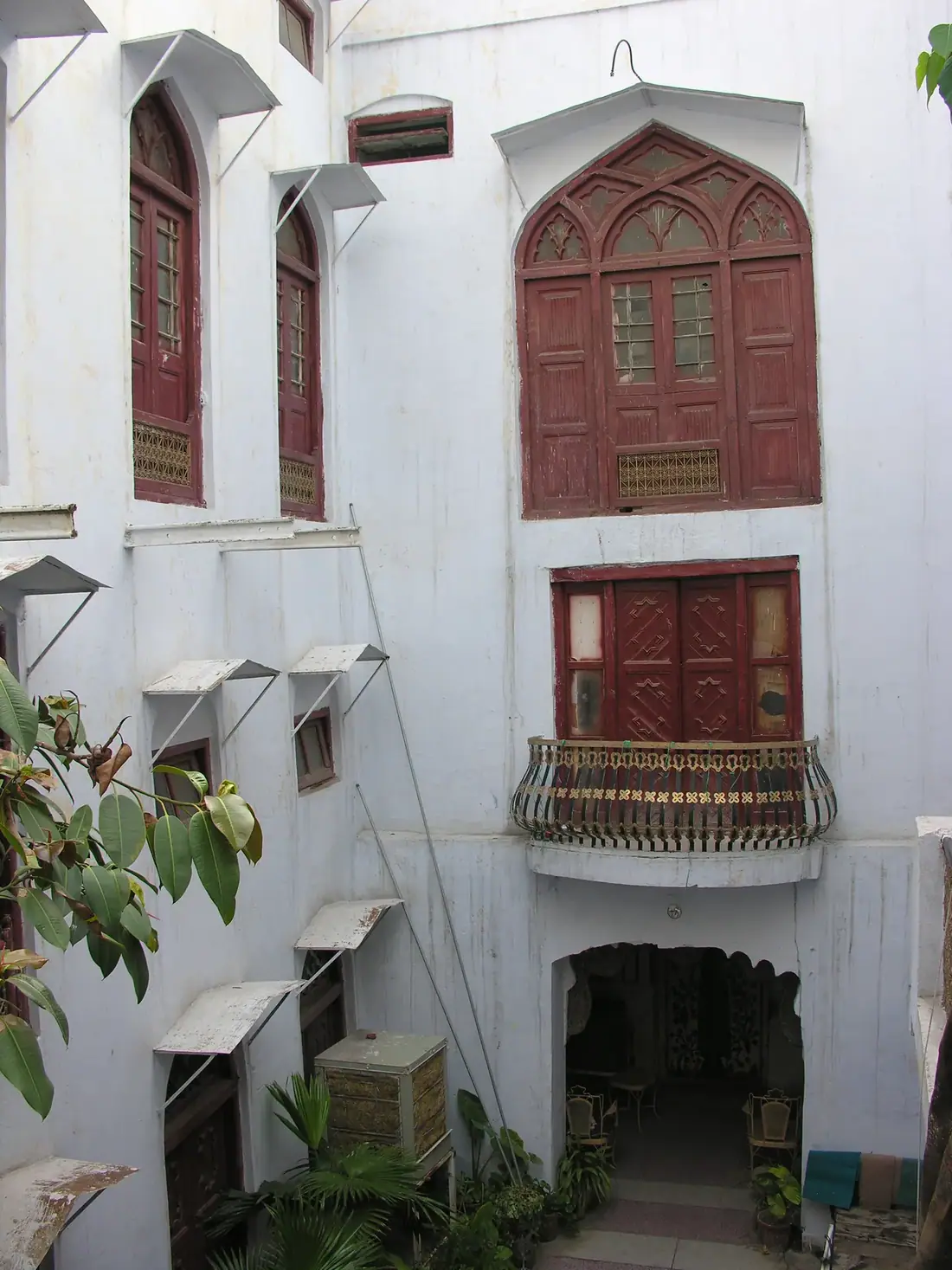
One Dawn column says that most accounts hold the present-day Fakir Khana to stand on the foundations of the original house Raja Todar Mal built in Bhati Bazaar. The museum itself says the property has long been associated with him.
If you come by car or rickshaw, ask to be set down at the gate. The final stretch is on foot. Visits to the museum are by appointment. Call or write to arrange one through the Visit page, and please ask before taking photographs.
The Authority’s guided tour
The Authority lists a guided tour called “Bhatti – The Chelsea of Lahore”. Its page lists many stops, among them Bhati Gate itself, the House of Allama Iqbal, Haveli Nau Nihal Singh, Haveli Wajid Ali Shah, the Oonchi Masjid, Fakir Khana Museum, the Naqsh School of Arts, Tharra Allama Iqbal and Tarannum Chowk. Locals say the Oonchi Masjid dates from Akbar’s reign. Press reports said that nearly 110 tourists took part in the tour of 30 December 2024, which began at the Fort Road Food Street. For dates, times and price, check the booking page at walledcitylahore.gop.pk/book-tours/bhatti-the-chelsea-of-lahore/.
Where the sources differ
A 2016 Pakistan Today piece says Hakiman Bazaar was named after Hakeem Abdullah Ansari, who is said to have built a mosque there; the Authority notes only the hakim shops. On when Iqbal moved into the gate, Dawn gives 1899, the federal archaeology department 1900, and the Pakistan Observer and Wikipedia 1901. All agree he left in 1905.
Frequently Asked Questions
Where is Bhati Gate in Lahore?
Bhati Gate, also written Bhatti Gate, is one of the thirteen gates of the Walled City of Lahore, counting the small Mori Darwaza. Data Darbar, the mausoleum of the Sufi saint Ali Hajweri, is just outside it, and Hakiman Bazaar begins just inside.
How far is Fakir Khana Museum from Bhati Gate?
Press reports put Fakir Khana Museum about 500 metres inside Bhati Gate, on the right-hand side; the figure is an estimate. The museum puts it five minutes’ walk from the gate. If you come by car or rickshaw, ask to be set down at the gate, because the final stretch is on foot.
Why is the Bhati Gate quarter called the Chelsea of Lahore?
A. Hamid credited the nickname to Hakim Ahmed Shuja in a 2006 Daily Times column. In 2024 the Walled City of Lahore Authority’s marketing director said the area was once known by that name because affluent and literary people lived there. Both name Allama Iqbal, Agha Hashr and Fakir Syed Azizuddin among past residents.
Can I visit the houses inside Bhati Gate?
Visits to Fakir Khana Museum are by appointment. Call or write to arrange one. Other historic buildings inside the gate, such as the House of Allama Iqbal, are lived-in or commercial, so do not expect to go inside them. The Walled City of Lahore Authority lists several of them as stops on its guided tour.
Sources and Further Reading
- Walled City of Lahore Authority: Gates of the Walled City — Thirteen gates with Mori Darwaza between Lohari and Bhati Gate, British-period rebuilding, Bhatti Rajput origin, Hakiman wala bazar and Victoria Girls High School
- Walled City of Lahore Authority: Bhatti – The Chelsea of Lahore tour — The guided tour and its listed stops
- Department of Archaeology and Museums: Bhati Gate — Attribution to Akbar, thirteen gates, British-period building and the Bhatti Rajput colony
- Wikipedia: Bhati Gate — Data Darbar outside the gate, Hakiman Bazaar beginning inside it and Iqbal’s years in the gate
- Dawn: The legendary Bhati Gate of the Walled City (Majid Sheikh, 16 October 2016) — Guzar Talwara under Akbar, renaming under Aurangzeb, and the Raja Todar Mal tradition
- Business Recorder: WCLA initiates rehab work on Bhatti Gate (30 August 2024) — The 2024 rehabilitation, the marketing director’s explanations of the name, the Chelsea nickname and past residents
- A. Hamid, Daily Times column on Bhati Gate (24 December 2006, archived at APNA) — The Chelsea of Lahore nickname credited to Hakim Ahmed Shuja, past residents and Makhzan
- Pakistan Observer: Iqbal’s Bhatti Gate residence being conserved for posterity (7 November 2022) — Iqbal’s rented house inside the gate until 1905 and the present uses of the building