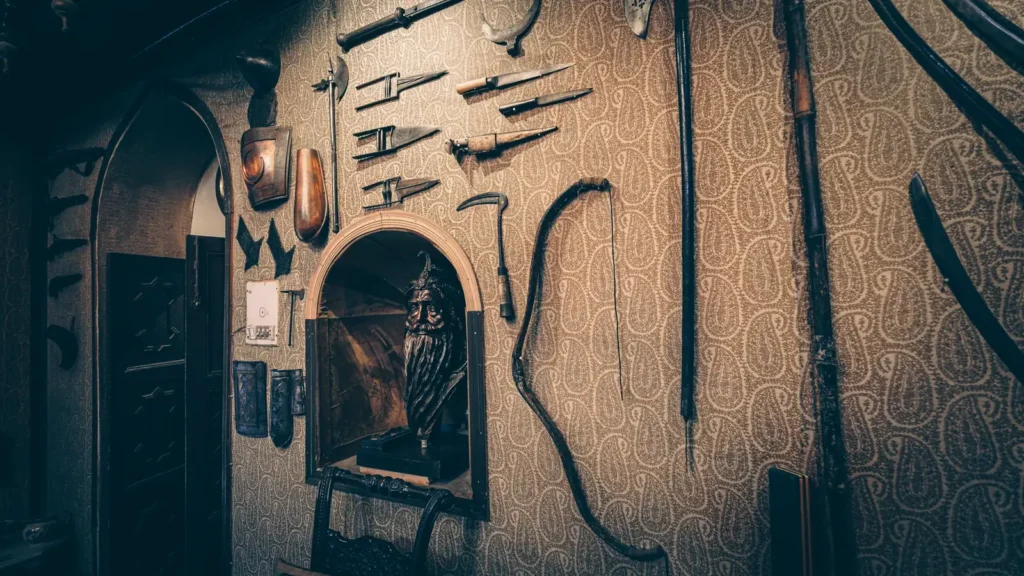

Maharaja Ranjit Singh’s army was commanded by Sikh generals such as Akali Phula Singh and Hari Singh Nalwa and, from 1822, by French and Italian veterans of Napoleon’s armies, among them Allard and Ventura. Estimates of its size at its height run from about 85,000 to well over 100,000 men. Fakir Imamuddin was keeper of Gobindgarh Fort, the treasury fort.
How the army was built
Ranjit Singh’s army was of two kinds, regular and irregular. The Encyclopaedia of Sikhism lists four major divisions: infantry, cavalry, artillery and the Fauj-i-Khas, “the special brigade”. It also names an irregular wing, the Akal Sena, a body of Akali horse numbering 4,000.

The first regular regiments came mainly from the remains of the Maratha mercenary brigades that the East India Company had defeated in 1803, together with a growing number of Company deserters. The Encyclopaedia says that in 1802, soon after taking Amritsar, Ranjit Singh engaged Company deserters to train his infantry. Though Sikh at its core, the army had large contingents of Muslims, mainly in the artillery, and of Hindus.
In 1822 Ranjit Singh decided to modernise the army on European lines. He took on Jean Francois Allard to train his cavalry and Jean-Baptiste Ventura to train his infantry. The two reached Lahore in March 1822, having served at Tabriz in Iran and travelled to India by way of Kabul, and were at first suspected of being British spies. The Encyclopaedia says Ranjit Singh employed them only after satisfying himself that they were officers of Napoleon; the Wallace Collection says their credentials were established by May.
The Fauj-i-Khas, the elite corps added to the army that year, was armed and trained on the latest Napoleonic model and officered by French and Italian veterans of Napoleon. Drill followed French practice, with every word of command given in French.
Akali Phula Singh
Akali Phula Singh commanded the Akali troops. The Encyclopaedia describes the Akalis as the most daring of Ranjit Singh’s soldiers and not fully subservient to the Maharaja’s authority. Phula Singh was born in 1761 at Shihan, a village now in ruins, and moved with his jatha, or band, to Amritsar in 1800.
At Ranjit Singh’s sixth attack on Multan, in 1816, he led a storming party of Akalis; the fort fell in the final assault of 1818. He was killed at Naushehra, also spelt Nowshera, on 14 March 1823, in a battle against the force of Amir Muhammad Azim Khan, who had marched from Kabul to occupy Peshawar. The Encyclopaedia puts the Akali contingent at 1,500 and says it made a desperate charge. The Sikh side won the battle.
Hari Singh Nalwa
Hari Singh Nalwa governed Kashmir and took Peshawar for the Sikh state. He was born at Gujranwala in April 1791 and died in 1837. He took part in the Multan campaigns of 1810, 1816, 1817 and 1818, and was second-in-command to Diwan Mohkam Chand when Attock passed to the Sikhs in 1813. He was appointed governor of Kashmir in 1820, in succession to Diwan Moti Ram.
His title Nalwa and his nickname Baghmar, meaning tiger-killer, are linked to an incident in which he is said to have killed a tiger. Posted to Hazara from 1822, he built the fort of Harikishangarh and raised the town of Haripur. In April 1831 he led a mission to Lord William Bentinck, and the Encyclopaedia says the royal instruction told him to rely on the advice of Diwan Moti Ram and Fakir Azizuddin.
In 1834 Nalwa took Peshawar and annexed it to the Sikh dominions, and two years later he built a fort at Jamrud at the mouth of the Khyber Pass. He died of wounds on 30 April 1837. The Encyclopaedia says he was locked in a grave battle against Afghans under Akbar Khan, was taken into the fort and died there that evening, and that his last instruction was that his death should not be made public until the Maharaja’s relief column arrived.
The European officers
Foreign officers served on conditions. The Encyclopaedia says they signed contracts not to shave their beards, not to smoke or eat beef, and to settle by marrying local women. The Wallace Collection adds a promise of fidelity to the Sikh Empire even against their own countrymen, and has them abstaining from smoking in public.
Jean Francois Allard, 1785 to 1839
Allard was a Frenchman born at Saint-Tropez and a veteran of Napoleon’s armies. He trained the cavalry. The Encyclopaedia’s entry on him, by J.M. Lafont, says Ranjit Singh regarded him more as a political and military adviser than a field commander, though he took command in crises: at Peshawar and in the Derajat in 1825, in the campaigns against Sayyid Ahmad Barelavi in 1827 and 1830, and at Jamrud in 1837 after Nalwa’s death. Allard escorted Ranjit Singh to the October 1831 meeting with Lord William Bentinck at Ropar. He died at Peshawar on 23 January 1839, the Encyclopaedia says, and was buried at Lahore with full military honours.
Jean-Baptiste Ventura, 1794 to 1858
Ventura was an Italian, born in the Duchy of Modena. He trained the infantry. The Encyclopaedia says he rose to the highest position, kept serving the Darbar after Ranjit Singh’s death and was given the title Count de Mandi. A note in the Encyclopaedia on C. Grey’s European Adventurers of Northern India calls him the “baron of the Fauj-i-Khas”.
Paolo Avitabile, 1791 to 1850
Avitabile, a Neapolitan, entered Ranjit Singh’s service around 1826 or 1827. He governed Wazirabad and then, in the late 1830s and early 1840s, Peshawar. The Wallace Collection calls him a notably brutal governor of Peshawar. The same note on Grey’s book describes his rule at Wazirabad as just and vigorous and his Peshawar administration as one of “gallows and gibbets”.
Claude Auguste Court, 1793 to 1880
Court reached Lahore in early 1827 with Avitabile and was given work in the artillery: training gunners, organising batteries and setting up arsenals and magazines on European lines. The Encyclopaedia says he became a general in 1836, and the note on Grey’s book calls him the “architect of Sikh artillery”.
Arsenal and supply at Gobindgarh
Gobindgarh Fort at Amritsar was raised in Ranjit Singh’s time, between 1805 and 1809, and named for Guru Gobind Singh. The Encyclopaedia says it held magazines, arsenals, royal stables and a mint, served as the state treasury, and kept the crown jewels and the Maharaja’s gold and silver.
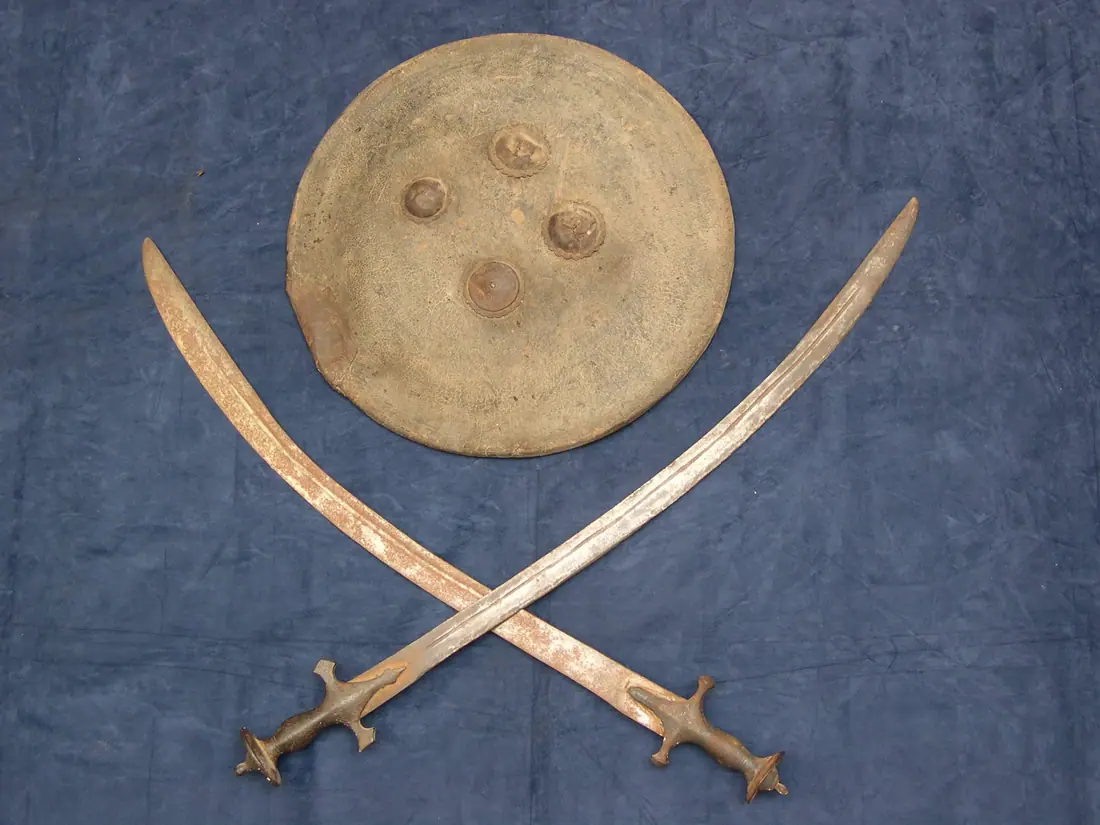
Fakir Imamuddin was its qiladar, or garrison commander, and remained in charge for many years. According to the Encyclopaedia’s entry on him, as fort commander he looked after the magazine, arsenal and studs and the fortifications of Amritsar city, held command of 500 horse and performed protocol duties for foreign visitors, and he virtually acted as the kingdom’s chief treasurer, authorising payments for the Darbar. The same encyclopaedia lists the superintendence of artillery stores among the duties of his brother Fakir Nuruddin.
The army after 1839
The Encyclopaedia of Sikhism says that Court and Ventura sided with Sher Singh, who took power in January 1841, and that after Sher Singh’s assassination in 1843 Court left the Sikh army and went to France in 1844.
In the Treaty of Lahore of 9 March 1846 the British limited the regular army of the Lahore State to 25 battalions of infantry of 800 bayonets each and 12,000 cavalry. The treaty also barred the Maharaja from keeping any British, European or American subject in his service without British consent.
Where the sources differ
Estimates of the army’s strength at its height differ: 85,000 men in the Wallace Collection, almost 100,000 in the Encyclopaedia and 120,000 for 1838 to 1839 in Wikipedia. For Nalwa’s death, the Encyclopaedia names Akbar Khan as the Afghan commander, while Wikipedia places his death at Jamrud and names the forces of Dost Mohammad Khan.
The Fakir brothers are described on the family page. The museum’s collection is reported to include Sikh arms.
For the wider political context, see the biography of Maharaja Ranjit Singh.
Frequently Asked Questions
How large was Maharaja Ranjit Singh’s army at its height?
Estimates run from about 85,000 to well over 100,000 men. The Wallace Collection gives 85,000, the Encyclopaedia of Sikhism almost 100,000, and Wikipedia 120,000 for 1838 to 1839, so no single figure is certain.
Who trained Ranjit Singh’s cavalry and infantry on European lines?
Jean Francois Allard, a Frenchman, and Jean-Baptiste Ventura, an Italian, reached Lahore in March 1822. Ranjit Singh engaged Allard to train his cavalry and Ventura to train his infantry. The Encyclopaedia of Sikhism says he employed them only after satisfying himself that they were officers of Napoleon.
What was Fakir Imamuddin’s role in Ranjit Singh’s army?
Fakir Imamuddin was keeper of Gobindgarh Fort at Amritsar, which the Encyclopaedia of Sikhism says held the magazine, arsenals, royal stables and the state treasury. The Encyclopaedia also says he held command of 500 horse. It lists the superintendence of artillery stores among the duties of his brother Fakir Nuruddin.
When and where did Hari Singh Nalwa die?
Hari Singh Nalwa died of wounds on 30 April 1837. The Encyclopaedia of Sikhism says he was wounded in a grave battle against Afghans under Akbar Khan, was taken into the fort and died there that evening. Wikipedia places his death at Jamrud and names the forces of Dost Mohammad Khan instead.
Who was Akali Phula Singh?
Akali Phula Singh commanded Ranjit Singh’s Akali troops and was killed at Naushehra on 14 March 1823, in a battle the Sikh side won. The Encyclopaedia of Sikhism puts the Akali contingent there at 1,500 and says it made a desperate charge.
Sources and Further Reading
- Encyclopaedia of Sikhism: Ranjit Singh (1780-1839) — The army’s divisions, the Akal Sena, the 1802 deserters, the 1822 reform, the officers’ contracts and Muslim contingents in the artillery.
- The Wallace Collection: Ranjit Singh’s Army & His Firangis — The 1803 Maratha brigades, the Napoleonic model of the Fauj-i-Khas, an army of 85,000, Ventura’s origin and Avitabile at Peshawar.
- Encyclopaedia of Sikhism: Allard, Jean Francois (1785-1839) — Allard’s arrival in March 1822, his role as adviser and commander in crises, his death at Peshawar and the French drill.
- Encyclopaedia of Sikhism: Court, Claude Auguste (1793-1880) — Court’s arrival in 1827, his work in the artillery, his rank from 1836, and his part after Ranjit Singh’s death.
- Encyclopaedia of Sikhism: European Adventurers of Northern India — The note on C. Grey’s book: the epithets for Ventura and Court and the verdicts on Avitabile’s rule.
- Encyclopaedia of Sikhism: Phula Singh Akali (1761-1823) — Phula Singh’s career at Multan and his death at Naushehra, with the Akali contingent of 1,500.
- Encyclopaedia of Sikhism: Hari Singh Nalva (1791-1837) — Nalwa’s birth, campaigns, governorships, forts and death on 30 April 1837.
- Encyclopaedia of Sikhism: Aziz ud-Din Faqir (1780-1845) — The April 1831 mission to Lord William Bentinck led by Nalwa.
- Encyclopaedia of Sikhism: Imam ud-Din Faqir (d. 1847) — Imamuddin as qiladar of Gobindgarh, his duties and his command of 500 horse.
- Encyclopaedia of Sikhism: Gobindgarh Fort — The building of the fort in 1805 to 1809 and its magazines, arsenals, stables, mint and treasury.
- Encyclopaedia of Sikhism: Anglo-Sikh Treaties (Lahore, 9 and 11 March 1846) — The limits on the Lahore army and on foreign officers in the Treaty of Lahore.
- Encyclopaedia of Sikhism: Council of Regency — The date of Sher Singh’s assassination in 1843.