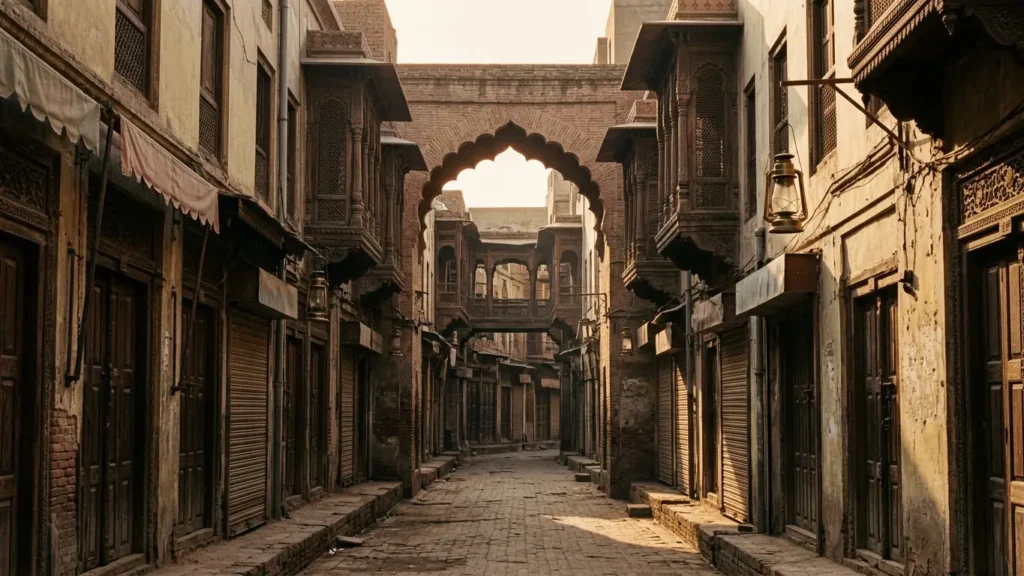
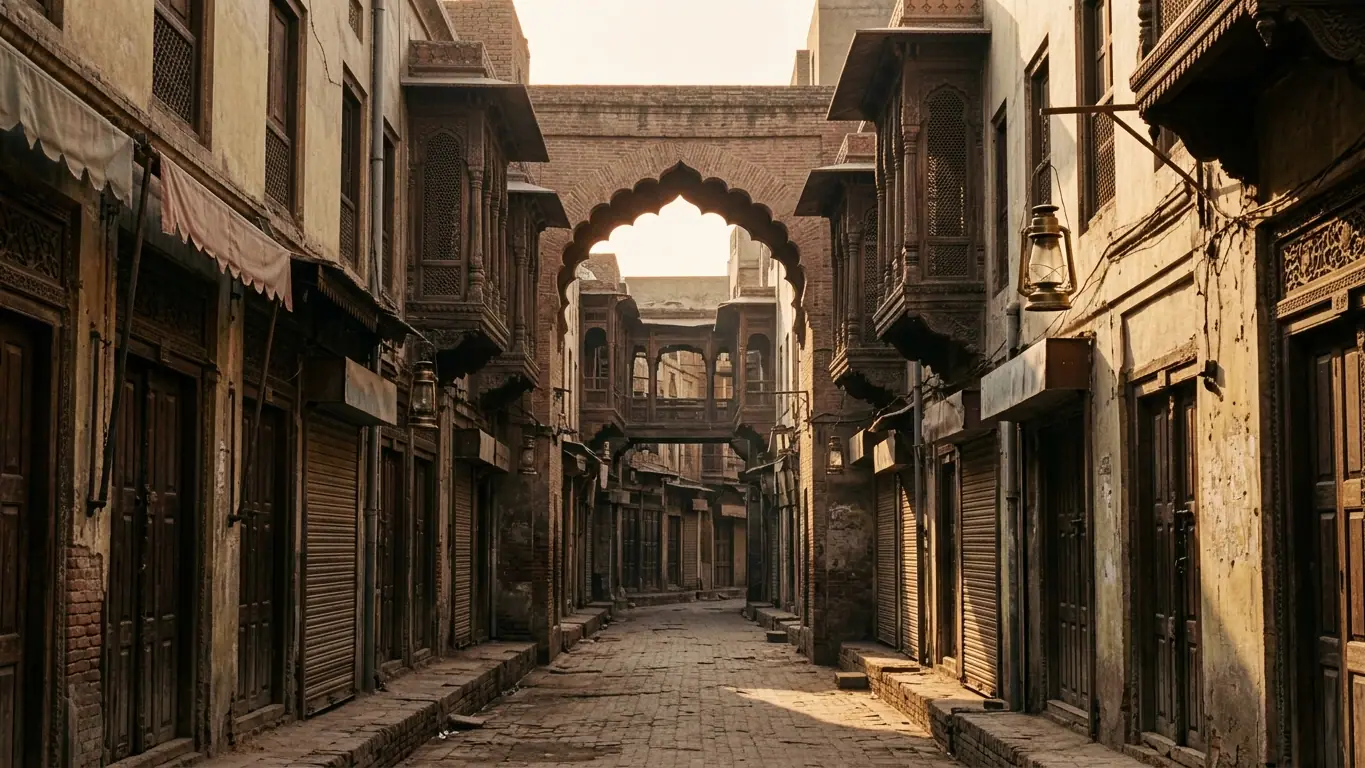
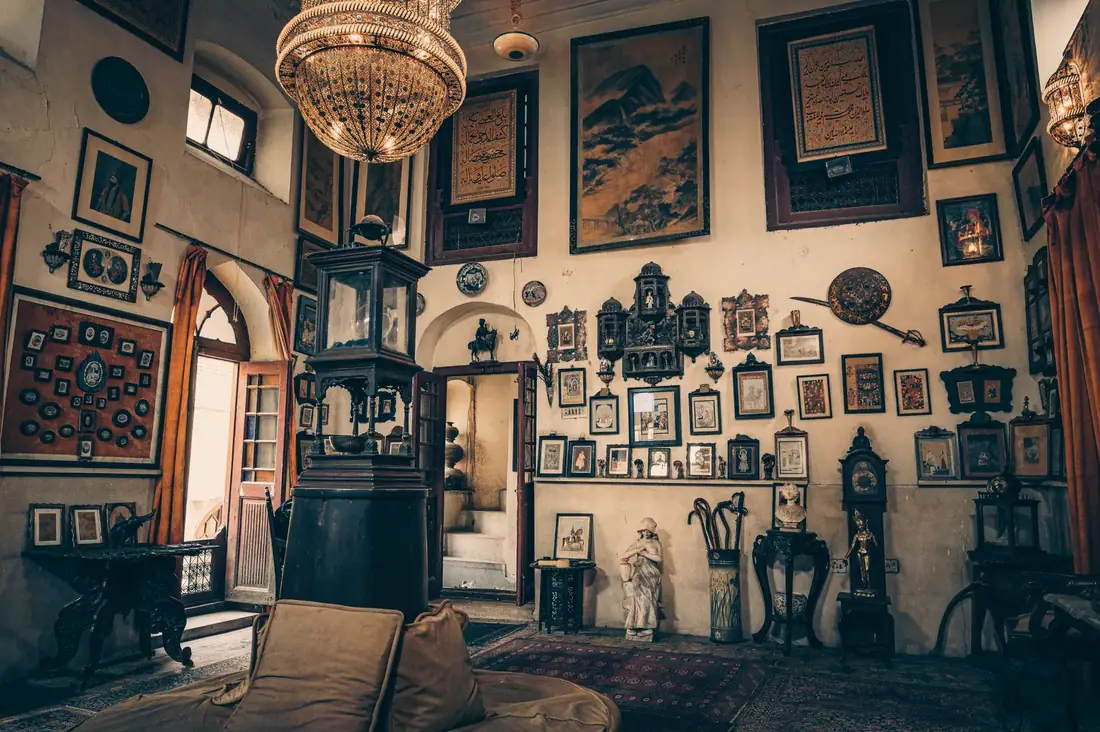
Androon Lahore is a local name for the Walled City of Lahore. In Akbar’s reign the city was enclosed by a nine-metre brick wall with thirteen gates, counting the small Mori Darwaza. Within the walls are mosques and bazaars, and Fakir Khana Museum stands in a haveli inside Bhati Gate.
What Androon Lahore means
A 2009 Dawn Young World article calls the walled old city Androon-e-Shehar, the inner city. In Urdu script the name is اندرونِ شہر لاہور, and the area is also known as the Old City or Inner Lahore. The Walled City of Lahore Authority (now styled the Punjab Walled Cities & Heritage Areas Authority) gives its cultural walking tour of the old city the title Wekh Androon Lahore.
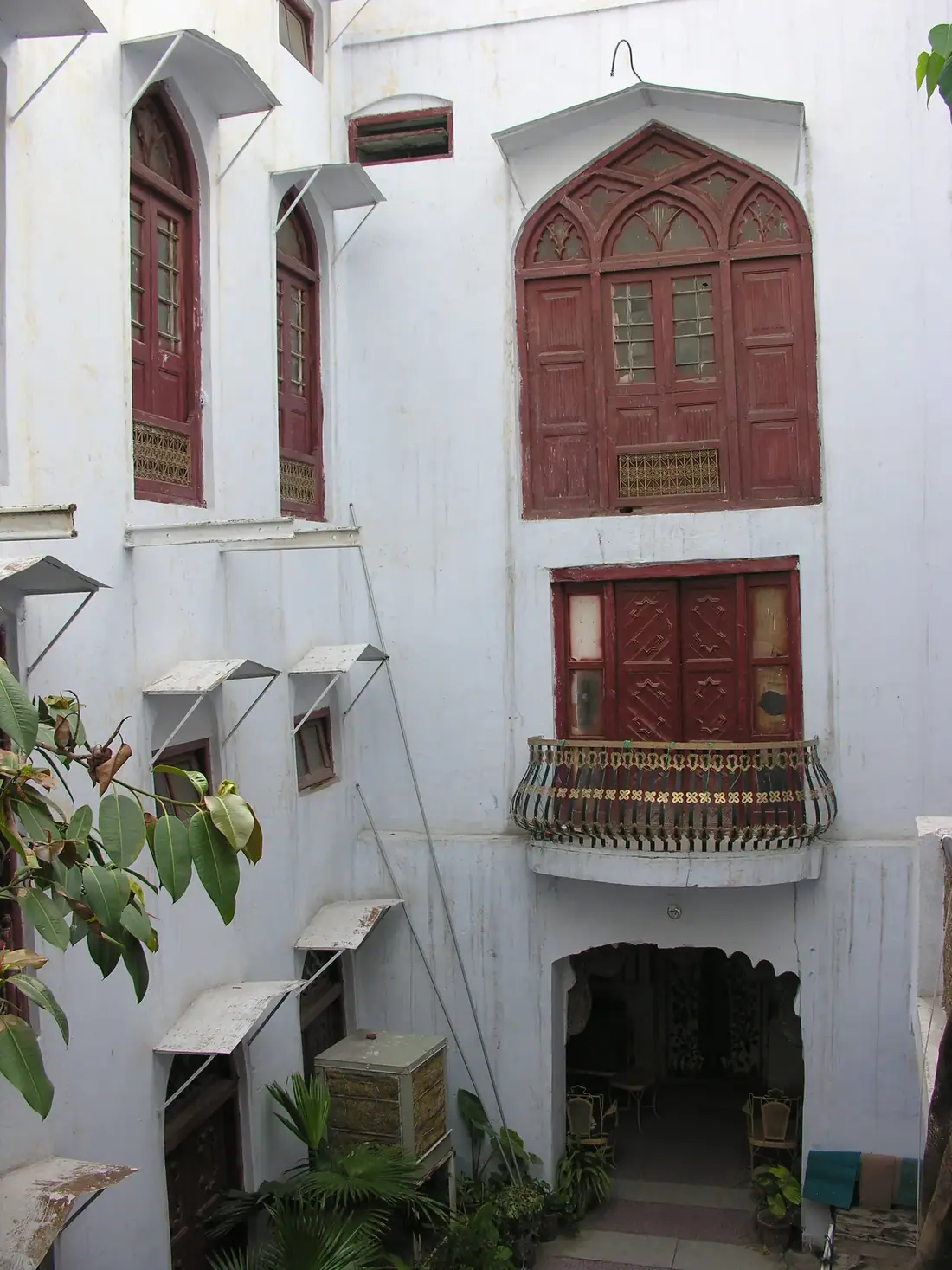
The Authority says no one knows how old Lahore is, but that the city certainly pre-dates by several centuries the conquest of the region by Mahmud of Ghazna in the early years of the 11th century. It puts the area of the Walled City at about 2.6 square kilometres.
The gates and the old walls
After an earlier mud wall, Akbar fortified the whole inhabited city with a brick wall nine metres high, pierced by thirteen gates. The count includes the small Mori Darwaza. The 2009 article adds a rampart and says that in Ranjit Singh’s time the fast-falling walls were rebuilt in 1812.
The Authority lists the gates in this order: Bhati, Roshnai, Lohari, Delhi, Sheranwala, Kashmiri, Akbari, Mochi, Shah Alam, Masti, Zakki, Taxali and Mori, and says they still bear their original names. Five of the thirteen, as the Authority’s gates page describes them:
- Bhati Gate is named after the Bhattis, an ancient Rajput tribe. It was rebuilt in the British period, and Fakir Khana Museum stands near it.
- Roshnai Gate, the Gate of Lights, lies between the Lahore Fort and the Badshahi Mosque. One of its two structures stands alongside the Samadhi of Ranjit Singh.
- Sheranwala Gate, formerly Khizri Gate, was named for the lions Ranjit Singh kept in cages at its sides, the Authority says.
- Lohari Gate, also written Lahori, was reconstructed in 1864 under Sir Robert Montgomery, as a marble plaque records.
- Mori Darwaza is the smallest gate, a gateway rather than a proper gate, between Lohari and Bhati Gate. It is still counted in the series.
Towards the end of Sikh rule, in the mid-19th century, the walls and gates were neglected and then pulled down by the British, and Shah Alam Gate was burnt in the Partition riots of 1947. Few of the old gates survive. The Authority says only Roshnai Gate keeps its original structure, and that the structures of several others, among them Mochi Gate and Taxali Gate, no longer exist.
Mosques, havelis and bazaars
The Authority places Wazir Khan Mosque about 200 metres inside the Delhi Gate bazaar, with the mosque’s hammam, or bath, next to it on the west, and calls the hammam the only public bath remaining from the Mughal period.
The Authority’s havelis page describes four houses. Haveli Dina Nath is linked to Raja Dina Nath, a courtier of Ranjit Singh from a Kashmiri Pandit family. Haveli Nau Nihal Singh, inside Mori Gate, is now used as Victoria Girls’ High School. Mubarak Haveli lies in the Mochi Gate area. At Bhati Gate stands Haveli Wajid Ali Shah, which the page calls the guest house of the Fakir Khana haveli. The museum itself is in a haveli in Kucha Fakir Khana.
Allama Muhammad Iqbal lived near Bhati Gate while studying for his graduation, and his residence is one of the stops on the guided walks through the gate.
The Authority’s gates page also notes the trades near particular gates. Inside Mochi Gate are dried fruit sellers and kite and firework shops. Urdu Bazaar, across from Mori Gate, is known for paper, books and stationery, and traditional musical instruments are sold around Taxali Gate. At Bhati Gate, Hakiman Bazaar takes its name from the shops of the hakims, or traditional physicians, and the Authority calls it the most popular market there.
Who looks after the Walled City
The Authority is an autonomous body, set up by the Government of Punjab in 2012 to preserve, conserve and administer the old city. Its Act was published in the gazette on 18 April 2012. The World Bank and the Government of Punjab had launched the Sustainable Development of Walled City Lahore Project in 2006, and the Aga Khan Trust for Culture came on board in 2007. Its website also lists guided tours, described at the end of this guide.
Heritage status: what is listed and what is not
UNESCO inscribed Fort and Shalamar Gardens in Lahore on the World Heritage List in 1981. The Lahore Fort stands in the north-west corner of the Walled City. The property was on the List of World Heritage in Danger from 2000 to 2012.
UNESCO’s page adds that the Badshahi Mosque and the Tomb of Ranjit Singh, although they stand outside the Fort proper, form an integral part of its physical and historical context, and that missions in 2003, 2005 and 2009 suggested including them in the inscribed property. As that page stands, neither is part of it.
Pakistan’s Tentative List is a first step before inscription. The list, last revised on 11 May 2026, has no entry for the Walled City of Lahore as a whole.
| Place | Status |
|---|---|
| Lahore Fort and Shalimar Gardens | Inscribed on the World Heritage List, 1981 |
| Badshahi Mosque | On the Tentative List, submitted 14 December 1993 |
| Wazir Khan’s Mosque | On the Tentative List, submitted 14 December 1993 |
| Tombs of Jahangir, Asif Khan and Akbari Sarai | On the Tentative List, submitted 14 December 1993 |
| Walled City of Lahore as a whole | Neither inscribed nor on the Tentative List |
Planning a day inside the walls
Fix the museum first, then build the rest of the day around it. Visits are by appointment. Call or write to arrange one, and ask about directions to the door at the same time. Please ask about admission when you arrange your visit, and please ask before taking photographs. See Plan your visit.
At the Roshnai Gate end are the Lahore Fort and the Badshahi Mosque, with the Samadhi of Ranjit Singh alongside the gate. Wazir Khan Mosque lies in the Delhi Gate bazaar. Around Bhati Gate are Hakiman Bazaar, Haveli Wajid Ali Shah, the old house of Allama Iqbal and the museum.
To reach the museum, enter by Bhati Gate and walk into Hakiman Bazaar. The address is Hakiman Bazaar, Kucha Fakir Khana, which Google Arts & Culture gives, in its own spellings, as Hakiman Bazar, Kucha Faqirkhana, Kucha Astana Sharif, Walled City of Lahore. Published accounts put the museum about 500 metres inside the gate, on the right, around five minutes on foot.
If you would rather walk with a guide, the Authority has run guided walks through Bhati Gate that included Fakir Khana Museum. The Express Tribune reported one on 30 December 2024, with nearly 110 participants. It began at the Fort Road Food Street and took in Bhati Gate, Sheesh Mahal Ghaati, Mubarak Haveli, the museum, the Naqsh School of Arts, Tarannum Chowk and Allama Iqbal’s residence. LUMS HR reported a similar tour on Saturday 22 February 2025.
For the Delhi Gate side, the Authority lists a day tour of old Lahore called Wekh Androon Lahore. The stops it shows include Delhi Gate, Sabeel Wali Gali, Shahi Hammam, Gali Surjan Singh, Haveli Mian Sultan, Phoolon Wali Gali, Haveli Dina Nath, Chitta Gate, Dina Nath Well, Chowk Wazir Khan, a craft bazaar, Kocha Shah Hussain and Wazir Khan Masjid, with cloth markets, cultural performances, a Lahori brunch and a rickshaw ride. Its tours menu also lists Havelis of Lahore, History by Night, Lahore Fort During Sikh Empire, Roshan Galliyan and Museum Mystery, among others. Check the Authority’s website for dates, prices and booking.
Where the sources differ
Sources give thirteen gates, counting the small Mori Darwaza, but the Authority’s Mori entry speaks of twelve gates, and Dawn’s 2009 article notes that some historians claim fourteen, a view it says is not widely supported. On the gates that remain, the Authority says only Roshnai Gate keeps its original structure, and Dawn’s article lists Roshnai, Delhi, Sheranwala, Bhati, Kashmiri and Lohari as gates still standing.
Frequently Asked Questions
What does Androon Lahore mean?
Androon Lahore is a local name for the Walled City of Lahore. A 2009 Dawn Young World article calls the walled old city Androon-e-Shehar, the inner city, and the area is also known as the Old City or Inner Lahore.
How many gates did the Walled City of Lahore have, and do any survive?
Akbar’s brick wall had thirteen gates, counting the small Mori Darwaza, the Walled City of Lahore Authority says. Few survive: the Authority says only Roshnai Gate keeps its original structure, and that Bhati Gate was rebuilt in the British period.
Is the Walled City of Lahore a UNESCO World Heritage Site?
No. UNESCO inscribed the Lahore Fort and Shalimar Gardens in 1981. The Walled City itself is not inscribed and has no entry on Pakistan’s Tentative List. Badshahi Mosque, Wazir Khan’s Mosque and the Tombs of Jahangir, Asif Khan and Akbari Sarai were each submitted to that list, a first step before inscription, on 14 December 1993.
Who looks after the Walled City of Lahore?
The Walled City of Lahore Authority, which its website now styles the Punjab Walled Cities & Heritage Areas Authority, is an autonomous body set up by the Government of Punjab in 2012 to preserve, conserve and administer the old city.
How do I reach Fakir Khana Museum from Bhati Gate?
Enter by Bhati Gate and walk into Hakiman Bazaar. Published accounts put the museum about 500 metres inside the gate, on the right, around five minutes on foot. Visits are by appointment. Call or write to arrange one, and please ask about admission when you do.
Sources and Further Reading
- Walled City of Lahore Authority: The Walled City — Age of Lahore, Akbar’s nine-metre brick wall with thirteen gates, and the 2.6 square kilometre area.
- Walled City of Lahore Authority: Gates — The thirteen gates, Mori Darwaza, the British demolitions, the 1864 Lohari Gate plaque, Wazir Khan Mosque and its hammam, and the bazaars.
- Walled City of Lahore Authority: Havelis — Haveli Dina Nath, Haveli Nau Nihal Singh, Mubarak Haveli and Haveli Wajid Ali Shah.
- Punjab Walled Cities & Heritage Areas Authority: About — The 2006 World Bank project, the 2007 Aga Khan Trust for Culture partnership and the Authority’s establishment in 2012.
- Walled City of Lahore Authority: Wekh Androon Lahore — The day tour of old Lahore and its listed stops.
- UNESCO World Heritage Centre: Fort and Shalamar Gardens in Lahore — The 1981 inscription, the Danger List years, and the context of the Badshahi Mosque and the Tomb of Ranjit Singh.
- UNESCO World Heritage Centre: Tentative Lists, Pakistan — The 14 December 1993 submissions for Badshahi Mosque, Wazir Khan’s Mosque and the Tombs of Jahangir, Asif Khan and Akbari Sarai, and the revision date of 11 May 2026.
- Dawn Young World (2009): The Walled City of Lahore, reprinted by APNA — The name Androon-e-Shehar, the rampart, the 1812 rebuilding and the gates listed as standing.
- The Express Tribune: Bhatti Gate guided tour takes visitors to heart of city (30 December 2024) — The route of a guided walk through Bhati Gate that included Fakir Khana Museum and Allama Iqbal’s residence.
- LUMS HR: Tour of Bhatti, the Chelsea of Lahore (22 February 2025) — A similar guided tour through Bhati Gate on Saturday 22 February 2025.
- Daily Pakistan (26 May 2018): Exploring the treasures of old Lahore at Fakir Khana Museum — The museum’s position about 500 metres inside Bhati Gate, on the right-hand side.
- Google Arts & Culture: Fakir Khana Museum — The museum’s address in Hakiman Bazar, Kucha Faqirkhana.