Duleep Singh was born at Lahore in 1838, the youngest son of Maharaja Ranjit Singh, and was proclaimed Maharaja in September 1843, aged five. The Punjab was annexed in 1849. He went to England in 1854 and died in Paris on 22 October 1893, aged 55.
A child Maharaja
Duleep Singh’s father, Maharaja Ranjit Singh, died in 1839, less than a year after his son’s birth in September 1838.
In September 1843, after the murder of Maharaja Sher Singh, the five-year-old boy was proclaimed Maharaja of the Punjab. The Encyclopaedia of Sikhism calls him the last Sikh sovereign of the Punjab. In his early years, it says, real authority had passed to the army through its military panchayats, or councils, and his mother, Maharani Jind Kaur, gradually took the role of de jure regent, meaning regent in law.
The Council of Regency and Fakir Nuruddin
An agreement reached at Lahore on 16 December 1846 and ratified at Bhyrowal Ghat on 26 December, known as the Treaty of Bhyrowal (also spelled Bharoval), pensioned off Maharani Jind Kaur. It created a Council of Regency of eight named chiefs to run the administration under the control of the British Resident. Fakir Nuruddin was one of the eight chiefs named to the council in the treaty.
Annexation, 1849
The Council of Regency lasted until the annexation of the Punjab after the Second Anglo-Sikh War of 1848 to 1849. The Encyclopaedia of Sikhism gives the council’s last act as the signing, on behalf of the minor sovereign, of the instrument of deposition and annexation of the Punjab, on 29 March 1849.
The young Maharaja lost his kingdom, and the Wallace Collection says he had to relinquish all rights for himself and his heirs to the throne of Lahore. The Koh-i-Noor diamond was surrendered in the same year, the Royal Collection catalogue records.
Fatehgarh and his tutors
After the annexation Duleep Singh was removed to Fatehgarh, in Farrukhabad district, and arrived there in February 1850. Dr John Login, a Scot, became his superintendent and guardian; the Encyclopaedia of Sikhism says he treated the boy like his own son. It names Walter Guise as his tutor at Fatehgarh from 1850 to 1853 and says Guise was also assigned to instruct him in the gospel.
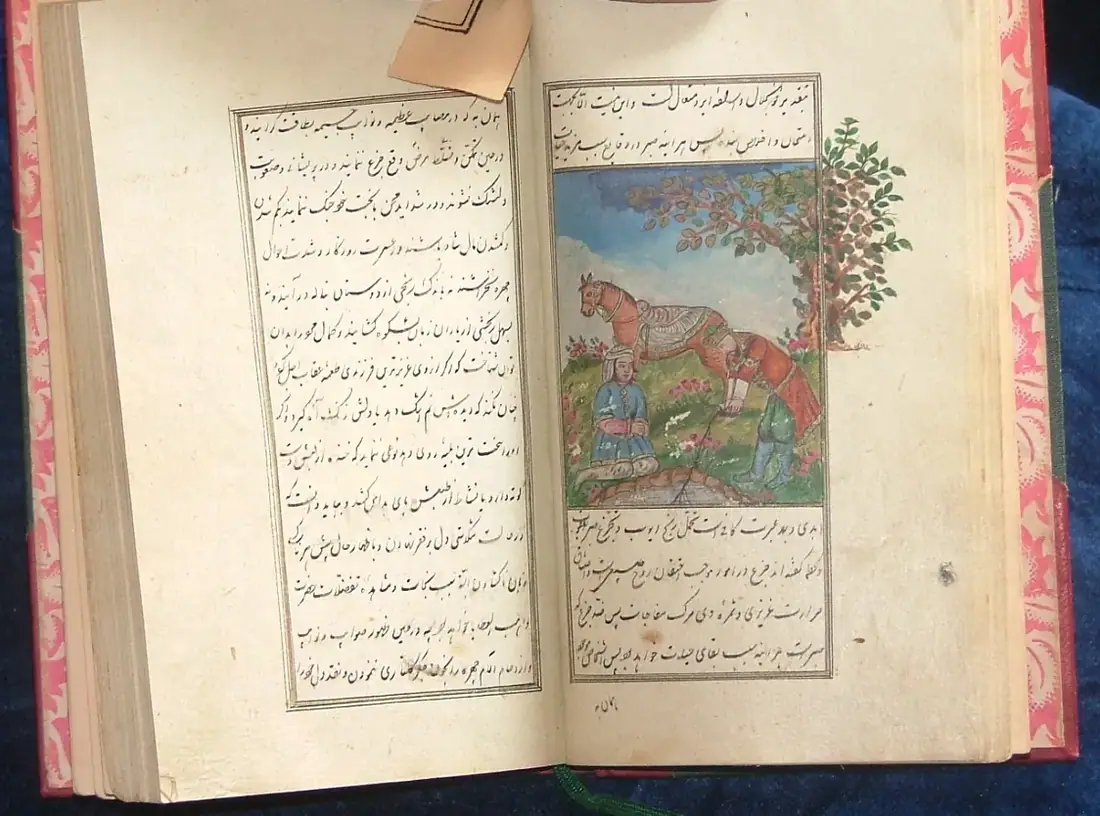
F.S. Aijazuddin, a member of the Fakir family, signs the encyclopaedia’s entry on Nuruddin, which says Nuruddin’s son Zahur ud-Din was for a time tutor to Duleep Singh. An article on Aijazuddin’s website also calls Zahur ud-Din the tutor in Persian to the young Maharaja during his exile at Fatehgarh.
On 8 March 1853 Duleep Singh was baptised a Christian at a private ceremony at Fatehgarh.
England, Elveden and the return to Sikhism
Duleep Singh sailed for England with his party on 19 April 1854 and reached London in May. Queen Victoria first met him that year, and the encyclopaedia says she took very favourably to him. Winterhalter’s portrait of him in the Royal Collection is signed and dated 1854.
The encyclopaedia records that towards the end of 1860 Maharani Jind Kaur travelled to Calcutta to meet her son, and that she died at Kensington, England, on 1 August 1863.
On 7 June 1864 Duleep Singh married Bamba Muller, described in the encyclopaedia as the daughter of a German merchant, at the British Consulate in Alexandria, Egypt. The couple lived for the first few years of their marriage at Elveden, a sporting estate in Suffolk of which, the encyclopaedia says, he took possession in September 1864.
In 1884 Thakur Singh Sandhanwalia, whom the Maharaja called his cousin, reached London and, the encyclopaedia says, read daily from the Guru Granth Sahib to Duleep Singh and instructed him in the tenets of the Sikh faith.
In 1886 Duleep Singh set out for India but was stopped at Aden, where the Wallace Collection says he was halted and effectively arrested. The encyclopaedia dates his Sikh baptism there to 25 May 1886 and says he resigned his allowance and gave up his allegiance to the British crown. It adds that he left Aden for Paris on 3 June 1886 and went to St Petersburg in 1887, seeking Russian help.
Death in Paris and burial at Elveden
Duleep Singh died in Paris on 22 October 1893, aged 55. The encyclopaedia says he died in a humble hotel room, short of money and without friends.
His body was taken to Elveden in England, and he was buried there, in Suffolk. Wikipedia says the burial was at Elveden church under Christian rites, beside his wife Bamba and a son. His death has a Chronicle of its own, How did Duleep Singh die?.
Where the sources differ
The Encyclopaedia of Sikhism and Wikipedia give his birth as 6 September 1838, the Wallace Collection as 23 September. The 1843 proclamation is dated 15, 16 or 18 September, depending on the entry. The Wallace Collection puts the Aden voyage in 1887, the encyclopaedia in 1886. Wikipedia dates the purchase of Elveden to 1863. It gives 22 October 1893 for his death in its infobox and 23 October in its text; a Substack piece by the journalist Harmeet Shah Singh reports that the Paris death register records 22 October.
Meet the Fakir family. Visits are by appointment. Call or write to arrange one.
Frequently Asked Questions
When and where was Maharaja Duleep Singh born?
Duleep Singh was born at Lahore in September 1838, the youngest son of Maharaja Ranjit Singh. The Encyclopaedia of Sikhism and Wikipedia give 6 September 1838, while the Wallace Collection gives 23 September 1838, so the sources differ on the day.
What connected Maharaja Duleep Singh to the Fakir family of Lahore?
Fakir Nuruddin was one of the eight chiefs named to the Council of Regency under the agreement of 16 December 1846. The Encyclopaedia of Sikhism entry on Nuruddin, signed by F.S. Aijazuddin, a member of the Fakir family, says his son Zahur ud-Din was for a time tutor to Duleep Singh.
Why is Duleep Singh called the last Sikh sovereign of the Punjab?
The Encyclopaedia of Sikhism uses that description. Duleep Singh was proclaimed Maharaja in September 1843, aged five, and the Punjab was annexed in 1849 after the Second Anglo-Sikh War. The Wallace Collection says he had to relinquish all rights for himself and his heirs to the throne of Lahore.
When did Duleep Singh become a Christian, and when did he return to Sikhism?
Duleep Singh was baptised a Christian on 8 March 1853 at a private ceremony at Fatehgarh. The Encyclopaedia of Sikhism dates his Sikh baptism at Aden to 25 May 1886. It says Thakur Singh Sandhanwalia, whom the Maharaja called his cousin, reached London in 1884 and instructed him in the Sikh faith.
Where did Maharaja Duleep Singh die, and where is he buried?
He died in a hotel room in Paris on 22 October 1893, aged 55. The Encyclopaedia of Sikhism gives that date, and so does Wikipedia’s infobox, though its text says 23 October. His body was taken to England, and he was buried at Elveden in Suffolk.
Sources and Further Reading
- Duleep Singh, Maharaja (1838-1893): Encyclopaedia of Sikhism — Main reference for his birth, proclamation, Fatehgarh, baptism, voyage to England, marriage, Elveden, return to Sikhism and death.
- Anglo-Sikh Treaty (Bhyrowal or Bharoval, December 1846): Encyclopaedia of Sikhism — The agreement of 16 December 1846, its ratification on 26 December, the pensioning off of Maharani Jind Kaur and the eight members of the Council of Regency.
- Council of Regency: Encyclopaedia of Sikhism — The Council’s last act, the signing of the instrument of deposition and annexation of the Punjab on 29 March 1849.
- Nur ud-Din Faqir (d. 1852): Encyclopaedia of Sikhism — Entry signed by F.S. Aijazuddin: Fakir Nuruddin’s membership of the Council of Regency and his son Zahur ud-Din as a tutor to Duleep Singh.
- Guise, Walter (d. 1857): Encyclopaedia of Sikhism — Walter Guise as tutor to Duleep Singh at Fatehgarh from 1850 to 1853.
- Jind Kaur, Maharani (1817-1863): Encyclopaedia of Sikhism — Her journey to Calcutta towards the end of 1860 and her death at Kensington on 1 August 1863.
- Article on the Fakir family: F.S. Aijazuddin’s website — Zahur ud-Din as tutor in Persian to the young Maharaja at Fatehgarh.
- Legacies: The Duleep Singh Family: The Wallace Collection — The 23 September birth date, the relinquishing of all rights to the throne, the arrival in London in May 1854, the halting at Aden, the 1887 date for that voyage and his age at death.
- The Maharaja Duleep Singh (1838-93): Royal Collection Trust — Winterhalter’s portrait of 1854, Queen Victoria’s first meeting with him and the Koh-i-Noor surrendered in 1849.
- Wikipedia: Duleep Singh — The 6 September birth date, the burial at Elveden church and the 22 and 23 October dates for his death.