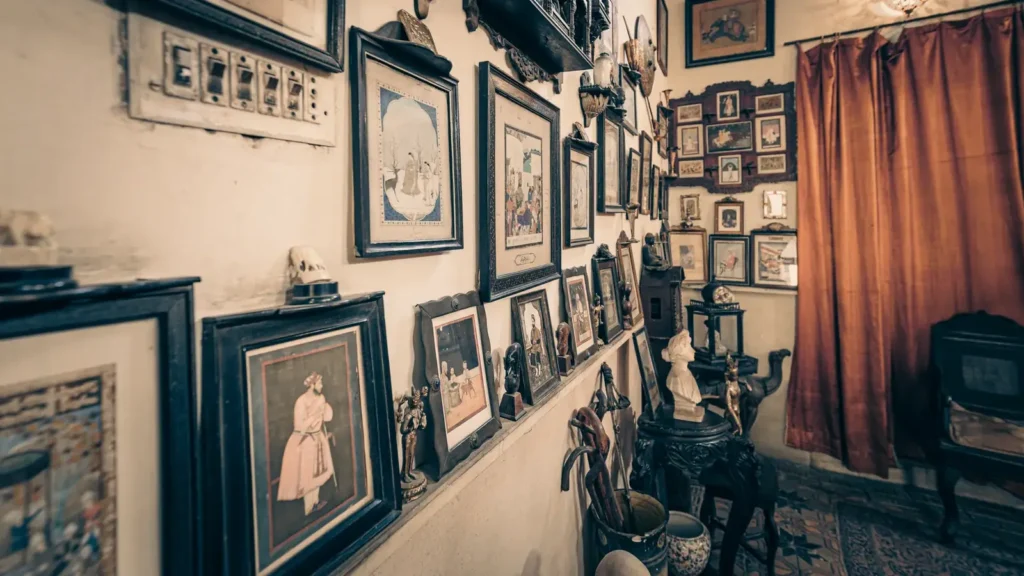

Paintings of Maharaja Ranjit Singh’s darbar include August Schoefft’s large court painting and Bishan Singh’s scene of about 1863 to 1864, both made after the Maharaja died in June 1839. Fakir Khana Museum holds a Sikh-court painting, Court of Maharaj Sher Singh, credited to Kher Singh.
The darbar as a subject
Ranjit Singh (1780 to 1839) took Lahore in 1799. According to the Wallace Collection, the Lahore Fort was the official setting for his darbar, but his court was a travelling one, and a visitor reported a darbar tent made entirely of shawls. His golden throne, made by the goldsmith Hafez Muhammad Multani between 1805 and 1810 and now in the Victoria and Albert Museum, has four handles at its base, which reflect the court’s mobility.
Painters at the Lahore court
The Wallace Collection notes that the wealth of Lahore drew artists to the city. Imam Bakhsh Lahori was heavily patronised and was a favourite of Ranjit Singh’s French generals, and many havelis were embellished with wall murals. Pahari-trained painters are also recorded at the Lahore court: Wikipedia’s account of Sikh painting says they were invited to paint Sikh rulers and nobility at the start of the nineteenth century.
Some court scenes were painted long after Ranjit Singh died. Bishan Singh’s The royal court of Maharaja Ranjit Singh, about 1863 to 1864 and now in the Toor Collection, was painted more than two decades after the Maharaja’s death and is therefore a retrospective picture.
European eyes on the darbar
Emily Eden met Ranjit Singh in November 1838. Her Portraits of the Princes and People of India was published privately in 1844 as hand-coloured lithographs, and one plate, A favourite horse of Ranjit Singh’s, is now at the Yale Center for British Art.
The Hungarian painter August Schoefft reached Lahore in November 1841 and worked as a royal painter under Sher Singh, who welcomed him and commissioned royal portraits. His Maharaja Sher Singh on the golden throne, about 1841 to 1842, is in the Toor Collection. Dawn’s Majid Sheikh writes that Schoefft stayed in Lahore for about a year, gathered hundreds of sketches and produced his paintings back home. Ranjit Singh had died before Schoefft arrived, so his presence in any Schoefft darbar scene was necessarily composed from other sources.
Schoefft’s large oil painting of the darbar, as Sikh Virsa Pakistan describes it, was sketched in Lahore in 1841 and completed in his studio back home between 1845 and 1855. It is set in the marble pavilion Ath-dara at the Musamman Burj in the Lahore Fort, where Ranjit Singh receives nazrana (offerings) with the royal family, the court, officials and European military officers present. Sikh Virsa says the painting is displayed at Maharani Jindan’s haveli in the Lahore Fort. Check with the Lahore Fort before you travel.
Sikh-court paintings at Fakir Khana
Fakir Khana Museum’s exhibit on Google Arts and Culture lists a painting titled Court of Maharaj Sher Singh, credited to Kher Singh. In 2018 the museum’s director told Gulf News about a painting of Sher Singh’s court that is said to carry a hidden message: that those who planned Sher Singh’s murder are seated in his darbar.
Reading a darbar scene
Dress marks rank. The Wallace Collection says robes of honour (khil’at) were central to court ceremony, and that such gifts enacted the hierarchy between a ruler and his subject. The date of a picture matters too: one made after June 1839 cannot show the Maharaja from life.
A crowded canvas needs a guide. Dawn says Schoefft’s large court painting shows almost every historical character of Punjab, and Sikh Virsa refers readers to F. S. Aijazuddin’s Sikh Portraits by European Artists for the characters depicted, so naming a sitter rests on specialist scholarship. A caption to a 2017 SBS Punjabi interview with Aijazuddin places Fakir Azizuddin and Imamuddin of the Fakir family at the bottom left of the Maharaja’s darbar in a painting by Schoefft.
Where the sources differ
Sikh Virsa calls Schoefft’s large court painting in the Lahore Fort Darbar of Maharaja Ranjit Singh and dates its completion to between 1845 and 1855. Dawn calls it The Court of Lahore, and other accounts give other dates. Dawn gives November 1841 for Schoefft’s arrival, while some sources say November 1840. Either date falls after Ranjit Singh’s death.
Visits are by appointment. Call or write to arrange one, and ask about admission and photographs when you do. Explore the collection.
Frequently Asked Questions
Did August Schoefft paint Maharaja Ranjit Singh’s darbar from life?
No. Ranjit Singh died in June 1839, and Schoefft reached Lahore in November 1841, though some sources say a year earlier. Any Ranjit Singh in a Schoefft darbar scene was therefore composed from other sources. Dawn writes that Schoefft gathered hundreds of sketches in Lahore and produced his paintings back home.
Do the Fakir brothers appear in paintings of Ranjit Singh’s court?
A caption to a 2017 SBS Punjabi interview with the historian F. S. Aijazuddin places Fakir Azizuddin and Imamuddin at the bottom left of the Maharaja’s darbar, as depicted in a painting by Schoefft. For the sitters in Schoefft’s large court painting, Sikh Virsa refers readers to Aijazuddin’s Sikh Portraits by European Artists.
What Sikh-court painting does Fakir Khana Museum hold?
The museum’s Google Arts and Culture exhibit lists a painting titled Court of Maharaj Sher Singh, credited to Kher Singh. Its director told Gulf News in 2018 about a painting of Sher Singh’s court said to carry a hidden message. Visits are by appointment. Call or write to arrange one, and ask about admission and photographs when you do.
Which painters were active in Lahore in Ranjit Singh’s time?
The Wallace Collection says the wealth of Lahore drew artists to the city and names Imam Bakhsh Lahori among those heavily patronised, a favourite of Ranjit Singh’s French generals. Pahari-trained painters are also recorded at the Lahore court, according to Wikipedia’s account of Sikh painting.
Were darbar scenes painted after Ranjit Singh died?
Yes. Ranjit Singh died in June 1839. The Wallace Collection includes Bishan Singh’s The royal court of Maharaja Ranjit Singh, painted about 1863 to 1864, more than two decades later. Sikh Virsa dates the completion of Schoefft’s large court painting to between 1845 and 1855.
Sources and Further Reading
- The Wallace Collection: The Lahore Durbar, the court of Lahore — Ranjit Singh’s dates, the travelling court, the golden throne, robes of honour, Lahore’s painters, and the Bishan Singh, Schoefft and Eden works.
- Sikh Virsa Pakistan: Darbar of Maharaja Ranjit Singh — Schoefft’s large court painting, its setting in the Ath-dara pavilion, and the pointer to F. S. Aijazuddin for the sitters.
- Dawn: Schoefft and the Princess Bamba Collection — Schoefft’s stay in Lahore, his sketches, and the description of The Court of Lahore.
- Royal Collection Trust: Portraits of the Princes and People of India — Emily Eden’s meeting with Ranjit Singh in November 1838 and her 1844 lithographs.
- SBS Punjabi: The role of the Fakir brothers in Maharaja Ranjit Singh’s darbar — The caption placing Fakir Azizuddin and Imamuddin in a painting by Schoefft.
- Google Arts & Culture: Fakir Khana Museum exhibit — The title and credited artist of Court of Maharaj Sher Singh.
- Gulf News: A museum is witness to Lahore’s rich past — The museum director’s account of a painting of Sher Singh’s court said to carry a hidden message.
- Wikipedia: Sikh painting — Pahari-trained painters invited to paint Sikh rulers and nobility.