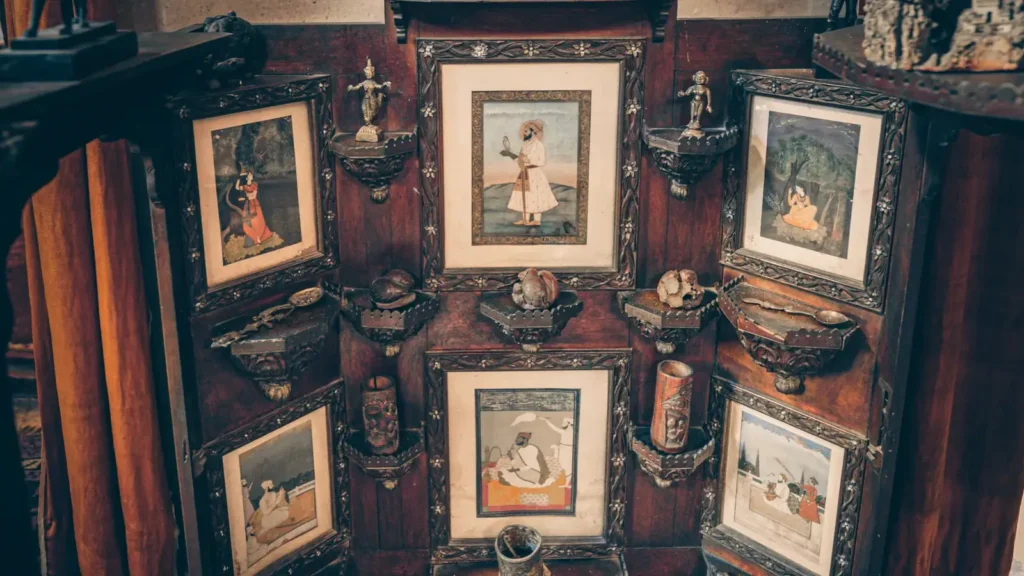
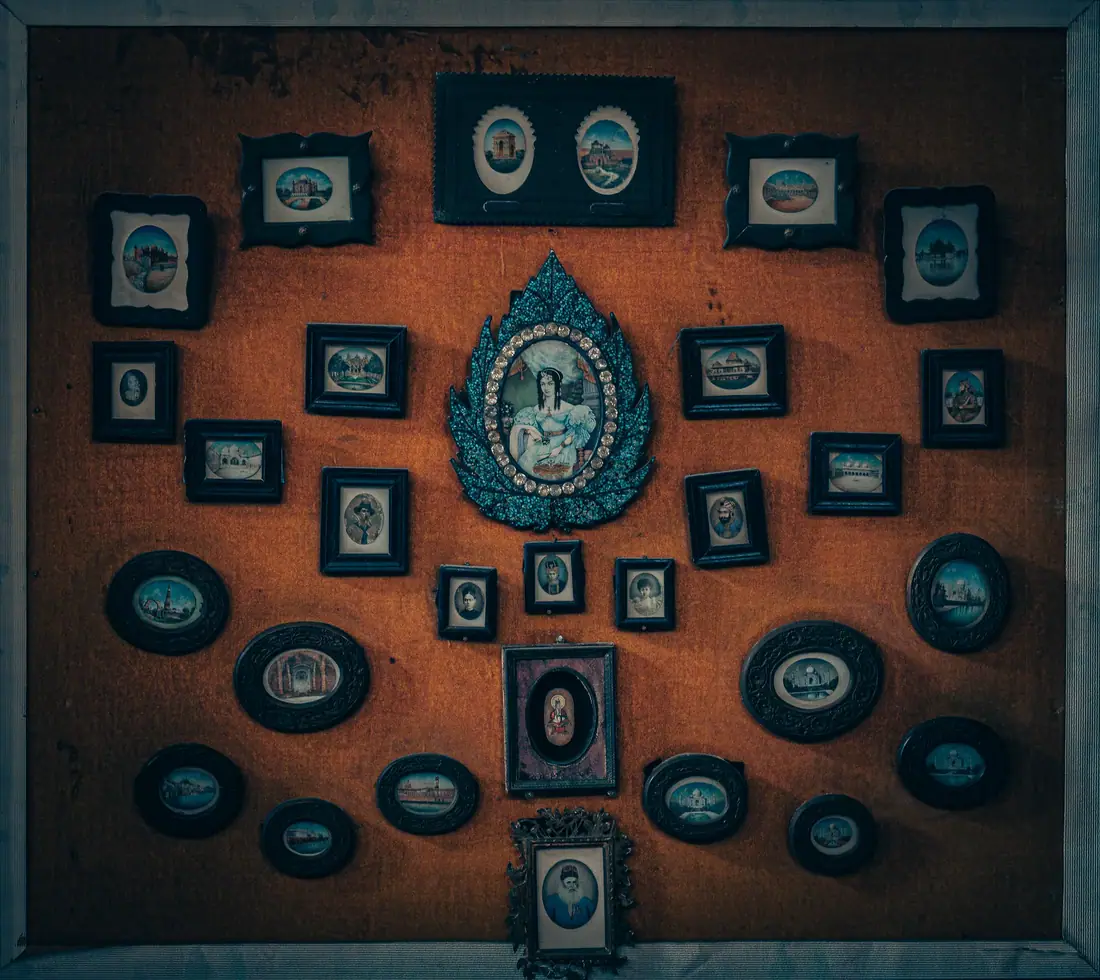
Miniature painting in South Asia is a tradition of small, highly detailed pictures, made as illustrations to texts or as individual paintings. Painters traditionally prepared their own paper, pigments, pens and brushes. The terms below follow a painting from the paper to the album.
Materials: wasli, pigments and brushes
Wasli
Wasli is the special paper support of the style, built up from several sheets to give a smooth surface and a strong base for detailed work. In a study of traditional materials, Kanwal Khalid of the University of the Punjab describes a wasli as four or eight layers of paper, depending on the size of the miniature, bound with glue. Traditionally the paste was fine flour, soaked and boiled, with blue vitriol (neela thotha) added to deter insects, termites especially.
In Lahore, the same study says, Fakir Ghulam Mohy ul Din Nausha Sani opened a publishing house in Bazaar Hakeeman, inside Bhati Gate, in the mid-eighteenth century and brought in paper makers. A paper makers’ quarter, Mohallah Kaghazian, grew up in the same locality. The study adds that paper made under the Fakir family’s supervision was very fine and that most manuscripts of Maharaja Ranjit Singh’s period used Lahori paper. It drew on interviews with the museum’s director.
Pigments and binders
In the book painting of the Islamic world between 1600 and 1800, the mineral sources of colour included gold, silver, lapis lazuli, ground cinnabar, orpiment and malachite. The painter bound the ground pigment with albumen or glue and, after the sixteenth century, with gum arabic.
Squirrel-hair brushes
For fine detail, painters ideally used a brush made of squirrel’s tail hair. On a burnished surface, a squirrel-hair brush can draw an unbroken line.
Techniques: burnishing and nim qalam
Burnishing
Once the layered board has dried, it is burnished with a smooth stone, such as agate or cornelian (called aqeeq), or with a large seashell, to give an even surface for the base colours. In the traditional sequence, burnishing then recurs through the work: after the base colours, after each layer for some painters, after the gold, which is applied last, and a final time to give the finished page a gem-like glow. In Islamic book arts, pages were finally burnished with a hard stone or glass.
Khaka and charba
To transfer an outline, the painter pricked a tracing with pinholes and dusted fine coal dust through it from a cloth pouch, a method called pouncing. Khalid’s study calls the tracing khaka. A durable tracing on deerskin is a charba, kept as a treasure in some painters’ families.
Nim qalam
Nim qalam, meaning half pen in Persian, is a tinted drawing method, and a work of about 1600 attributed to Manohar is an example. At the end of the sixteenth century and the beginning of the seventeenth, Mughal court artists sometimes produced paintings of this kind, in pale, mostly monochrome washes, highlighted with gold and touches of body colour.
Formats: albums and borders
Hashiya
Hashiya is the Persian word for a border, edge or selvedge. In miniature painting it names the margin around the central image or text of a manuscript or album page. It flourished in Mughal ateliers of the sixteenth and seventeenth centuries, where margin-makers formed a distinct category of artisan. A border can be later than the picture it frames: the Victoria and Albert Museum records the borders of its Akbar Hawking, a work of about 1600, as made in Lucknow in the late eighteenth century.
Muraqqa
Muraqqa means patchwork in Persian. It is an album that gathers single-page paintings, sketches, engravings and illuminated calligraphy by various artists, bound with varied hashiya borders. The practice began in early fifteenth-century Iran. The earliest written evidence of Mughal album production comes from Akbar’s reign, and the earliest surviving albums from Jahangir’s.
Schools named by the museum
The museum says its miniatures belong to Mughal, Persian, Rajput, Kangra and Pahari traditions.

Persian
Persian workshops supported by rulers and members of their extended families produced copies of famous literary works and histories, as well as Qur’ans.
Mughal
In Mughal art the single-page painting gained prominence from the mid-sixteenth century, and such pages were collected into albums. Mughal miniature painting has its own introduction.
Rajput
A Google Arts and Culture story from the Academy of Fine Arts and Literature says that after the Mughal decline the new patrons, from about 1700 to 1900, were the provincial governors of Rajasthan and the Pahari kingdom. It adds that Rajput artists were anonymous, and that geographical categories are used to explain how Rajput styles evolved.
Pahari and Kangra
A second story from the same academy places the rise of Pahari painting at the close of the seventeenth century, in the Punjab Hill states, and names Basholi, as the story spells it, as the earliest Pahari school. It also discusses the Pahari art made in Kangra under Raja Sansar Chand.
At Fakir Khana
The museum describes a nineteenth-century portrait of Nawab Mumtaz Ali Khan, about 12 by 6 inches, on paper. Tradition holds that it took fifteen years to paint, with a brush of a single hair. The portrait has its own chronicle.
Visits are by appointment. Call or write to arrange one, and explore the collection before you come.
Where the sources differ
The museum’s collection page lists the maker of the Nawab Mumtaz Ali Khan portrait as unknown, while a Google Arts and Culture entry credits Ghulam Ali.
Frequently Asked Questions
What is wasli paper in miniature painting?
Wasli is the layered paper support of traditional South Asian miniature painting. Kanwal Khalid of the University of the Punjab describes it as four or eight layers of paper, depending on the size of the miniature, bound with a paste of boiled flour and blue vitriol to deter insects, then burnished smooth.
What does nim qalam mean?
Nim qalam means half pen in Persian and names a tinted drawing method. At the end of the sixteenth century and the beginning of the seventeenth, Mughal court artists sometimes produced paintings of this kind, in pale, mostly monochrome washes, highlighted with gold and touches of body colour.
What is the difference between a muraqqa and a hashiya?
A muraqqa is a bound album of single-page paintings, sketches, engravings and illuminated calligraphy, a practice that began in early fifteenth-century Iran. A hashiya is the border or margin around the central image or text of an album or manuscript page. A muraqqa by its nature has varied hashiyas.
What is the single-hair brush portrait at Fakir Khana Museum?
Tradition holds that the museum’s portrait of Nawab Mumtaz Ali Khan took fifteen years to paint with a brush of a single hair. The museum describes it as a nineteenth-century work, about 12 by 6 inches, on paper, and lists the maker as unknown, while a Google Arts and Culture entry credits Ghulam Ali.
Sources and Further Reading
- Kanwal Khalid, University of the Punjab: Traditional Materials Used by the Miniature Artists, An Introductory Study — Wasli layers, flour glue with blue vitriol, burnishing, khaka and charba, squirrel-tail hair brushes, and the mid-18th-century publishing house in Bazaar Hakeeman.
- Gyan Museum: Wasli — Wasli as layered handmade paper pasted with starch, and the burnished surface that lets a squirrel-hair brush draw an unbroken line.
- The Metropolitan Museum of Art: The Arts of the Book in the Islamic World, 1600-1800 — Mineral pigments and binders, final burnishing of book pages, the pounce method, and workshops supported by rulers.
- The Metropolitan Museum of Art: The Shah Jahan Album — Origin of muraqqa albums in early fifteenth-century Iran and the rise of the single-page painting in Mughal art.
- Victoria and Albert Museum: Akbar Hawking (about 1600) — Definition of nim qalam and the later Lucknow borders on an Akbar-period drawing.
- Impart: Hashiya — Hashiya as the border of a manuscript or album page, margin-makers in Mughal ateliers, and muraqqa as patchwork albums.
- Google Arts & Culture: Indian Miniature Paintings, the Punjab and Sikh Schools (Academy of Fine Arts and Literature) — Indian miniatures as small-scale, highly detailed compositions, and the Rajput patrons c. 1700-1900.
- Google Arts & Culture: Indian Miniature Paintings, the Pahari School (Academy of Fine Arts and Literature) — Pahari painting in the Punjab Hill states and Kangra under Raja Sansar Chand.
- Google Arts & Culture: Fakir Khana Museum exhibit — Lists the portrait of Nawab Mumtaz Ali Khan with the name Ghulam Ali.