As read on 14 October 2026, Wikipedia’s article on Fakir Khana calls it the largest privately owned museum in South Asia and says Raja Todar Mal first owned the house. The sources it cites give no measurement for the first claim and no document for the second. Object counts vary, and the Fakir brothers held more specific offices than “emissaries”.
Why Wikipedia matters for Fakir Khana
Other directory pages carry the same lead sentence and the same manuscript and miniature figures. Each Wikipedia wording below is as read on 14 October 2026; the article was last edited on 23 August 2026.
The largest-museum claim
Wikipedia’s lead says Fakir Khana “is the largest privately owned museum in South Asia” and cites two pages: the museum’s Google Arts & Culture story and a February 2016 article in Tanqeed Magazine. The story, published under the museum’s name, says “one of the biggest private museums in Pakistan”. Tanqeed uses two phrases: the museum “counts itself as being among the largest in the world”, and elsewhere it is “the single largest privately-owned museum in South Asia”.
Other pages use further variants. Gulf News in 2018 says “one of the largest private museums in South Asia”. Locally Lahore in 2016 and Daily Pakistan in 2018 write that it is “said to be the largest private collection in South Asia”. VisitLahore calls it “the largest private museum in Pakistan”, and Urdu Wikipedia’s lead calls it the second largest museum in Lahore. None of these phrases, Tanqeed’s included, comes with a measurement.
The museum’s own page says it stands “among Pakistan’s largest and most significant private museums”, and it describes its holdings as one of South Asia’s largest private collections. The Google story also says it is “the only privately owned museum recognized by the Government of Pakistan”, and the listing of the federal Department of Archaeology and Museums repeats that text.
Manuscripts and miniatures: the numbers
Published figures for the whole collection vary widely, and none of them is an inventory.
| Source | Figure given |
|---|---|
| Locally Lahore, 2016, and Daily Pakistan, 2018 | Over 13,000 pieces of art |
| The Friday Times, 2018 | Almost 20,000 artifacts and antiques |
| Tanqeed Magazine, 2016 | More than 20,000 historical artifacts |
| The museum’s Google story | Over twenty thousand specimens of art and artifacts |
| Wikipedia, body text, citing the Google story | Approximately 21,000 pieces of art and artifacts |
The family numbers the collection at around 20,000 objects.
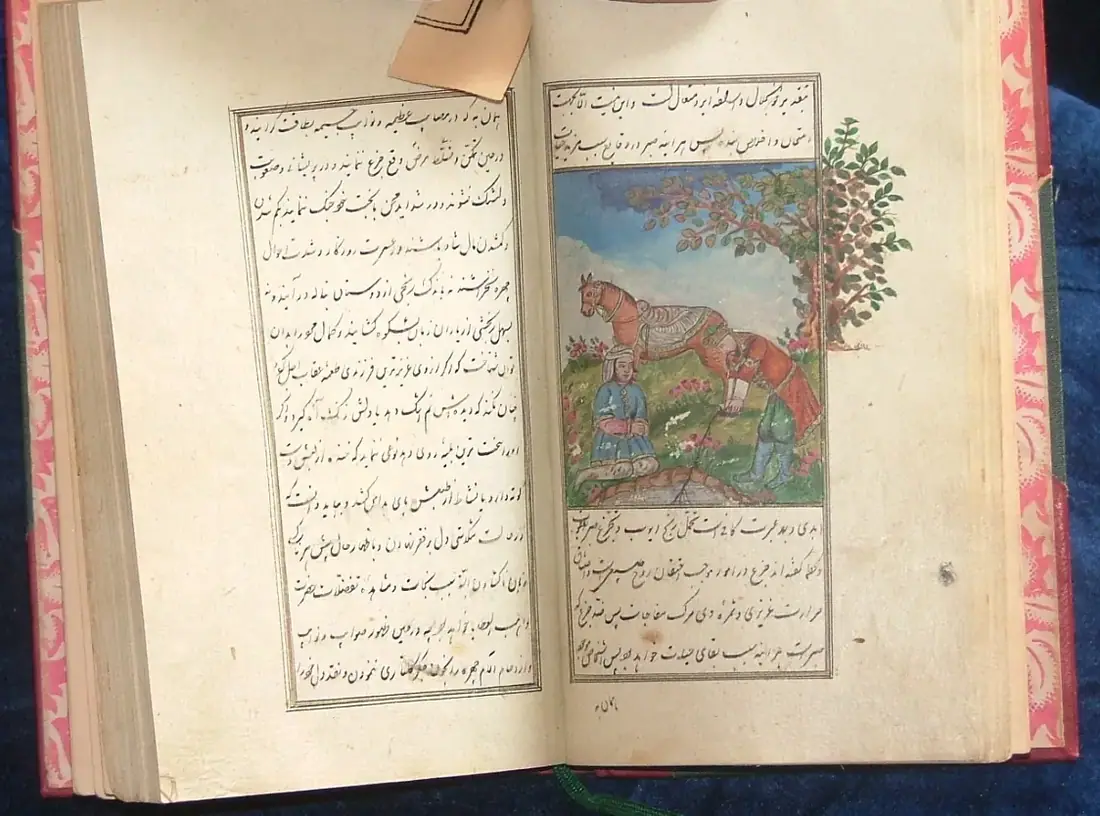
Wikipedia’s body text also lists 10,000 manuscripts and gives an exact count of displayed miniature paintings, attaching the Tanqeed article to both. Tanqeed gives no miniature count. It says that by about 1780 the family had more than 10,000 books, of which about 1,800 are still to be found in the museum. The Google story says the family “has acquired a collection of ten thousand manuscripts” and gives a miniature figure that differs from Wikipedia’s.
The Todar Mal question
Wikipedia says the house “was originally owned by Raja Todar Mal”, attaching the Google story, which says “The building originally belonged to Raja Todar Mal”. The federal listing repeats the same text. Wikipedia’s own article on Todar Mal, finance minister to the emperor Akbar, does not mention the house. The museum’s own page words it more carefully: “The property has long been associated with Raja Todar Mal”. Family tradition links the site to Raja Todar Mal; none of these pages cites a document.
Titles and roles of the brothers
Wikipedia says the three Fakir brothers “served as emissaries to Maharaja Ranjit Singh”, and Tanqeed, drawing on the family, uses the same word. The Encyclopaedia of Sikhism names a distinct office for each.
Its entry on Fakir Azizuddin, written by a member of the Fakir family, calls him “physician, diplomat, and foreign minister at the court of Maharaja Ranjit Singh” and says he remained “almost solely responsible for the conduct of foreign relations”. It describes Fakir Imamuddin as qiladar (garrison commander) of Gobindgarh Fort at Amritsar, where the bulk of the Sikh crown jewels was kept, and says he “virtually acted as the chief treasurer of the kingdom”. Locally Lahore and Daily Pakistan call one brother a finance minister without saying which; the encyclopaedia entries do not use the title.
For Fakir Nuruddin the encyclopaedia gives a sequence. He was appointed court physician (hakim) in 1801 and put in charge of Lahore’s dispensaries, became governor of Gujrat after taking Wazirabad in June 1810, and was appointed a member of the Council of Regency formed in December 1846 for the young Maharaja Duleep Singh. The entry on Azizuddin adds that Nuruddin held charge of the city of Lahore.
Where the sources differ
Family accounts reported in the press differ on which brother kept the key to the royal treasury. Tanqeed calls Nuruddin the Maharaja’s home minister and royal physician and gives him custody of that key, and calls Imamuddin the custodian of the fort in Amritsar. Gulf News says Imamuddin held the keys to Ranjit Singh’s wealth in Govindgarh Fort, and calls Nuruddin the health minister.
How changes are proposed on Wikipedia
Wikipedia asks anyone with a close connection to a subject to propose changes on the article’s Talk page rather than edit it directly. Its edit-request page asks for a detailed and specific description of each change, in the form “Change X to Y”, with a reliable source if appropriate. The sourced points above are set out so that any editor can check them.
Frequently Asked Questions
Is Fakir Khana the largest privately owned museum in South Asia?
Wikipedia’s lead says so, as read on 14 October 2026. The sources it cites do not measure the claim: the museum’s Google Arts & Culture story says “one of the biggest private museums in Pakistan”, and a 2016 Tanqeed article gives the superlative without a measurement. The museum describes its own holdings as one of South Asia’s largest private collections.
How many objects and manuscripts does Fakir Khana Museum hold?
The family numbers the collection at around 20,000 objects. Press figures run from over 13,000 (Locally Lahore, 2016; Daily Pakistan, 2018) to more than 20,000 (Tanqeed, 2016), and none is an inventory. As read on 14 October 2026, Wikipedia lists 10,000 manuscripts; Tanqeed says the family’s library once ran to more than 10,000 books, about 1,800 of which remain.
Did Fakir Khana originally belong to Raja Todar Mal?
As read on 14 October 2026, Wikipedia says the house “was originally owned by Raja Todar Mal”, and the museum’s Google Arts & Culture story and the federal listing say the same, without citing a document. The museum’s own page says the property “has long been associated with” him. Family tradition links the site to Raja Todar Mal.
What were the Fakir brothers’ titles at Ranjit Singh’s court?
Wikipedia, as read on 14 October 2026, and Tanqeed call the three brothers emissaries. The Encyclopaedia of Sikhism names distinct offices: Azizuddin as physician, diplomat and foreign minister, Imamuddin as qiladar of Gobindgarh Fort at Amritsar, and Nuruddin as court physician, governor of Gujrat and member of the Council of Regency formed in December 1846.
How does Wikipedia handle edits by people connected to a subject?
Wikipedia’s edit-request page says editors who have a conflict of interest should generally use an edit request, even if they can technically edit the page. It asks for a detailed and specific description of the change, in the form “Change X to Y”, and a reliable source if appropriate.
Sources and Further Reading
- Wikipedia: Fakir Khana — The lead superlative, the object, manuscript and miniature figures, the Raja Todar Mal statement and the description of the brothers as emissaries, as read on 14 October 2026
- Wikipedia: Edit requests — Wikipedia’s guidance that editors with a conflict of interest should generally use specific “Change X to Y” edit requests
- Google Arts & Culture: Fakir Khana Museum — The story published under the museum’s name: one of the biggest private museums in Pakistan, over twenty thousand specimens, ten thousand manuscripts, the Raja Todar Mal statement and the “only privately owned museum” wording
- Tanqeed: A Visit to the Fakir Khana (February 2016) — Two superlatives, more than 20,000 historical artifacts, and a library of more than 10,000 books by about 1780 with about 1,800 remaining
- Encyclopaedia of Sikhism: Aziz ud-Din Faqir (1780-1845) — Azizuddin as physician, diplomat and foreign minister, and Nuruddin’s charge of the city of Lahore
- Encyclopaedia of Sikhism: Imam ud-Din Faqir (d. 1847) — Imamuddin as qiladar of Gobindgarh Fort at Amritsar who virtually acted as chief treasurer
- Encyclopaedia of Sikhism: Nur ud-Din Faqir (d. 1852) — Nuruddin as court physician, governor of Gujrat and member of the Council of Regency formed in December 1846