Fakir Khana Museum in Lahore holds a handmade jamawar robe that it describes as Maharaja Ranjit Singh’s. The museum’s director also attributes a sash and a shawl to him. Jamawar is the name for lengths of patterned shawl fabric made to be tailored into coats and robes.
The robe in the collection
The museum describes the robe as handmade, with a dense paisley pattern. In a 2018 interview with Gulf News, its director pointed at the objects and called the sash, the robe and the shawl Ranjit Singh’s personal belongings. Explore more objects in the museum’s online collection.
The museum says its textile collection almost entirely belongs to the Sikh period of the nineteenth century.
Jamawar and the paisley pattern
Janet Rizvi’s entry on Kashmir shawls in the Encyclopedia of India describes jamawar as lengths of shawl fabric with all-over designs, made to be tailored into men’s coats (jama). A Prinseps research essay says such lengths were often assembled into robes. The Chronicle on jamawar patterns and motifs looks at the cloth in more detail.
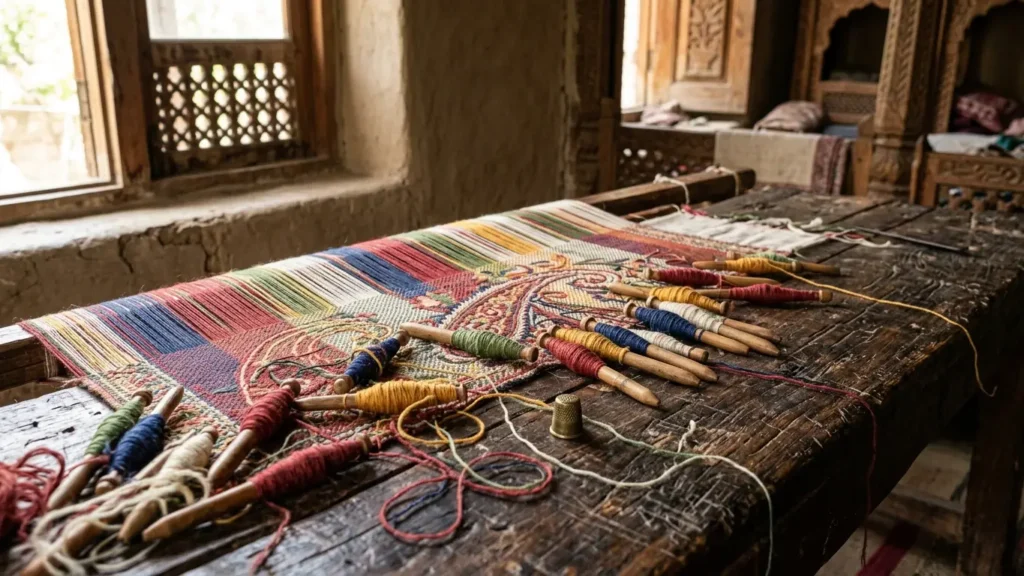
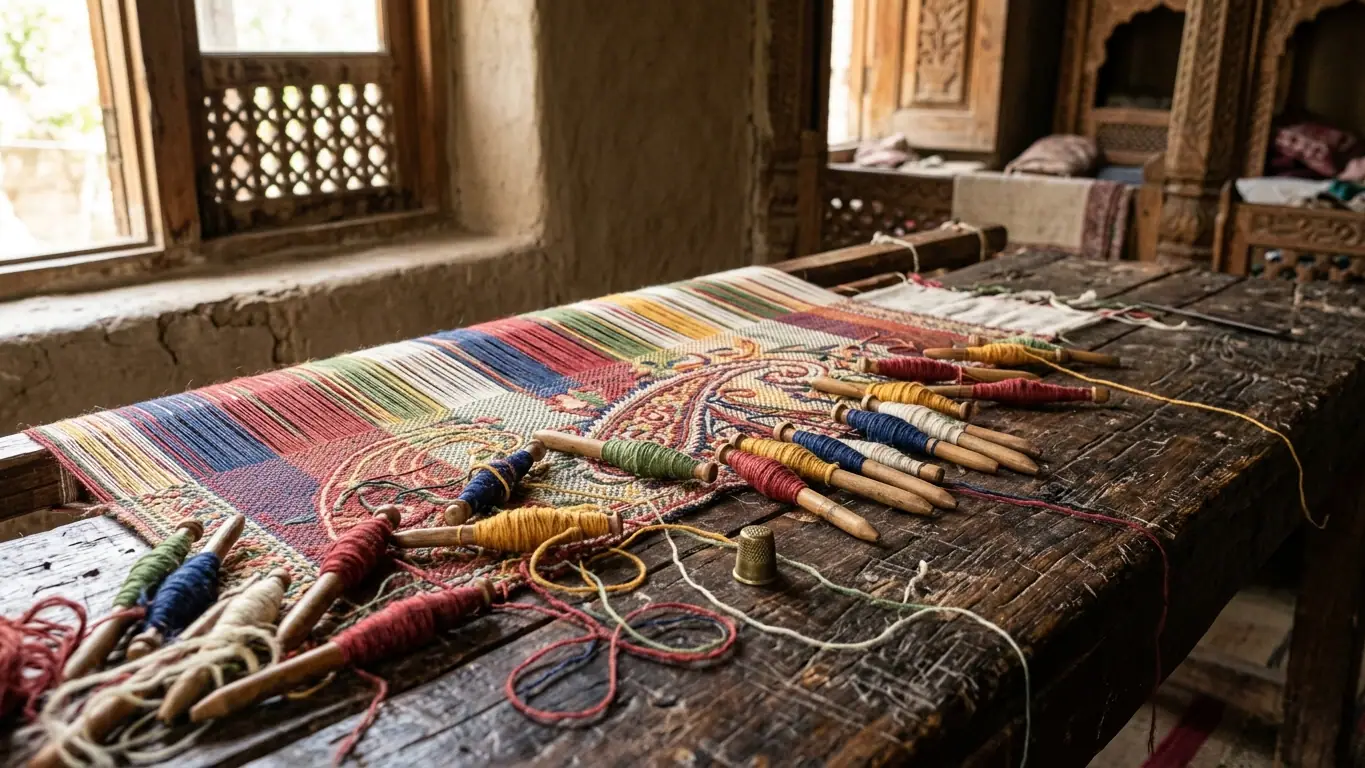
Classic Kashmir shawls were woven in a 2:2 twill by the kani technique, in which small bobbins of coloured yarn carry the weft, so that the design is woven into the structure of the cloth. Some patterns were embroidered in silk instead, on plain pashmina. Pashmina is the fabric woven from pashm, the fine undercoat of goats of the high plateaus of Tibet and Ladakh. Many elaborate shawls were woven in pieces, sometimes hundreds, on several looms and joined by a needleworker called a rafugar with almost invisible seams. Shawl makers also produced long narrow pieces, called patka or shamla, for men’s sashes.
Fine work was slow. The same entry says that by the middle of the nineteenth century particularly fine shawls took months and even years to complete.
The buta, a cone-shaped bouquet or flowering bush with its tip bent, evolved from the single flowering plants used on shawl ends in the seventeenth century. It later became known as the paisley, after the Scottish town whose weavers copied Kashmir shawls. Frank Ames, a dealer and scholar of kani shawls, writes that after Ranjit Singh annexed Kashmir in 1819 the shawl underwent, within a few years, a dramatic change in format and design, from repeated paisleys on the ends to patterns spreading over the whole shawl.
How Ranjit Singh dressed in 1838
At their first meeting, at the end of November 1838, Emily Eden saw Ranjit Singh in a red silk dress and no jewels. For more, see the Chronicle Emily Eden at Ranjit Singh’s court.
What a 2016 essay says about gifts
A 2016 essay in Tanqeed says that a large part of the collection consists of gifts given to the Fakir brothers by Ranjit Singh. That statement covers the collection as a whole.
Caring for an old textile
A care guide from Te Papa, a national museum in New Zealand, calls light the greatest enemy of textiles, because the damage it does accumulates over time and cannot be reversed. It recommends a light level of 50 lux, storing textiles flat where possible, handling them as little as possible and hanging only costumes that are strong enough. If in doubt, it advises asking a professional conservator.
Visiting the museum
Visits are by appointment. Call or write to arrange one: see Plan your visit. Please ask before taking photographs.
Frequently Asked Questions
What does Fakir Khana Museum say about Maharaja Ranjit Singh’s robe?
The museum describes it as a handmade jamawar robe of Maharaja Ranjit Singh, with a dense paisley pattern. In a 2018 interview with Gulf News, its director called the sash, robe and shawl Ranjit Singh’s personal belongings.
What is jamawar?
Janet Rizvi’s entry in the Encyclopedia of India describes jamawar as lengths of shawl fabric with all-over designs, made to be tailored into men’s coats. A Prinseps research essay says such lengths were often assembled into robes.
What does a 2016 essay say about gifts from Maharaja Ranjit Singh?
A 2016 essay in Tanqeed says that a large part of the Fakir Khana collection consists of gifts given to the Fakir brothers by Ranjit Singh. That statement covers the collection as a whole. The museum’s director separately calls the robe, sash and shawl Ranjit Singh’s personal belongings.
How do you arrange a visit to Fakir Khana Museum?
Visits to Fakir Khana Museum in Lahore are by appointment. Call or write to arrange one, and please ask before taking photographs. Explore the museum’s online collection for more on its textiles and other objects.
Sources and Further Reading
- Fakir Khana Museum: Google Arts & Culture — The museum’s handmade jamawar robe of Maharajah Ranjit Singh, and its statement that the textile collection almost entirely belongs to the 19th-century Sikh period.
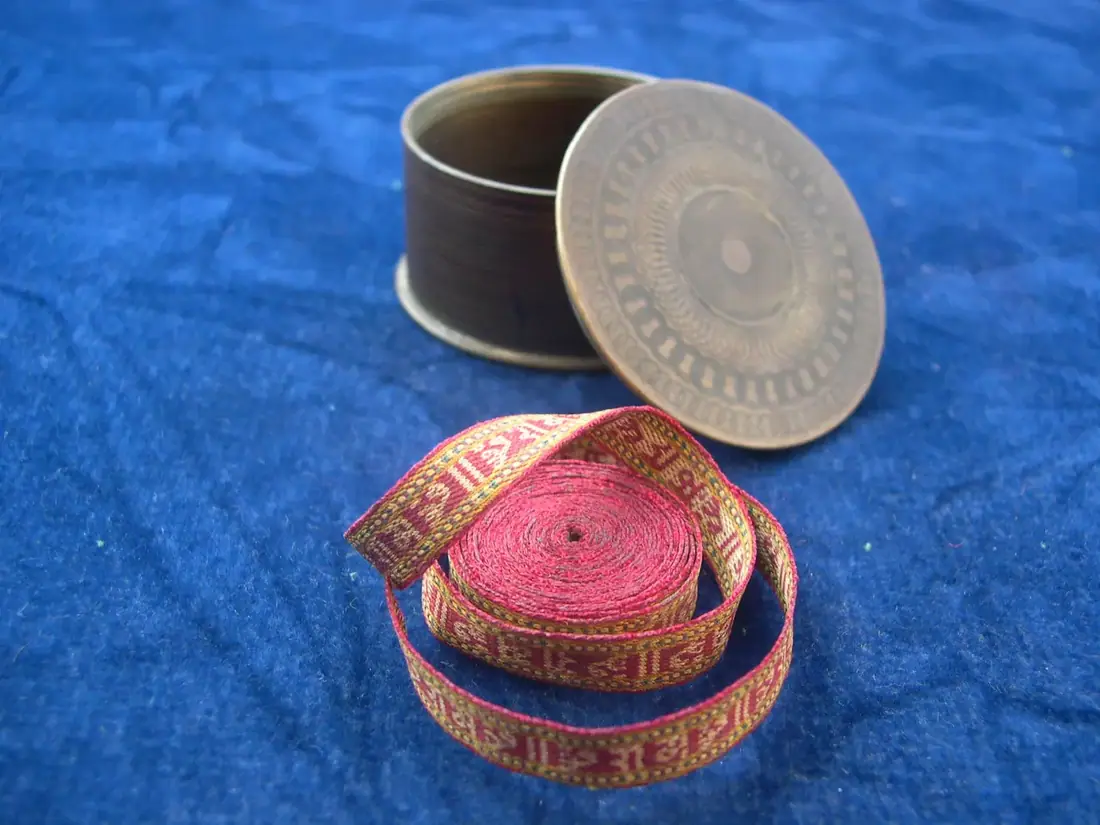
- A museum is witness to Lahore’s rich past: Gulf News (2018) — The museum director’s 2018 interview calling the sash, robe and shawl Ranjit Singh’s personal belongings and mentioning a ribbon.
- Kashmir Shawls: Encyclopedia of India (Encyclopedia.com) — Janet Rizvi on jamawar lengths for coats, the twill weave and kani technique, men’s sashes, making time, the bent-tip buta and the name paisley.
- Jamawar: Cloth, Craft and Cultural Memory: Prinseps — Jamawar lengths often assembled into robes.
- Up the Country, Emily Eden’s letters: Project Gutenberg — Eden’s 1838 descriptions of Ranjit Singh’s dress and his followers’ dress, and the year and a half taken to make her party’s shawls.
- Khalsa and explosive graphics in the age of Maharaja Runjit Singh: Frank Ames (Textiles Asia, 2011) — The change in Kashmir shawl format and design after the annexation of Kashmir in 1819.
- Caring for textiles and clothing: Te Papa — General museum guidance on light, storage and handling of textiles.
- A Visit to the Fakir Khana: Tanqeed (February 2016) — The essay’s statement that a large part of the collection consists of gifts to the Fakir brothers from Ranjit Singh.