Origins and lineage
The Family’s Lahore Roots
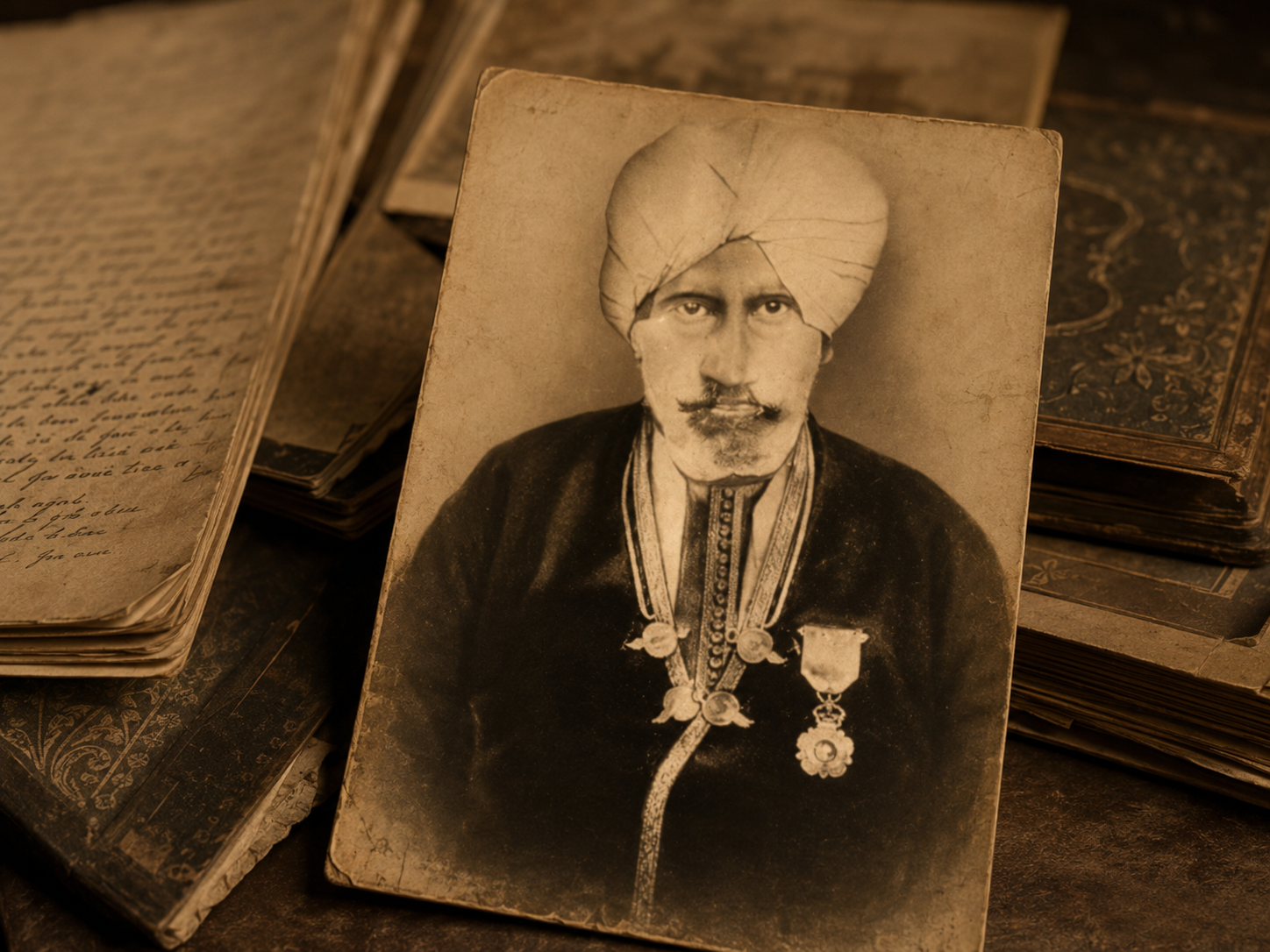
The family’s shajra, the genealogy known as Khandan-e-Fuqra-e-Lahore, traces its line through Makhdoom Jahaniyan Jahan Gasht of Uch and Sayyed Hussain Pir Kamal of Chunian to Fakir Syed Ghulam Mohyuddin. The family honours him as Nausha-e-Sani, the patriarch of its Lahore branch.
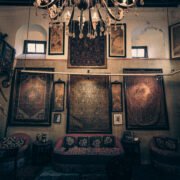
The family settled in Lahore around 1730. Ghulam Mohyuddin trained as a hakim under Hakim Abdullah Ansari, and medicine remained the family’s calling for generations. The household also gathered books, building a library that once ran to thousands of volumes.
Why ‘Fakir’?
Family accounts say the title came from Ghulam Mohyuddin’s devotion to the Sufi Fakir Imanat Shah Qadri. In British correspondence after 1826, Azizuddin is recorded using it as a mark of humility. The two accounts sit easily together, and the house carries the idea in its name: Fakir Khana, the House of the Humble Ones.
The Sikh court of Lahore · 1799–1849
The voice, the keys and the seal
Maharaja Ranjit Singh took Lahore in 1799 and ruled until his death on 27 June 1839. Ten years later, on 29 March 1849, the Sikh state was annexed by the British. Through those fifty years three Muslim brothers served it as physicians and envoys, a governor and the keeper of its treasury fort.
The voice
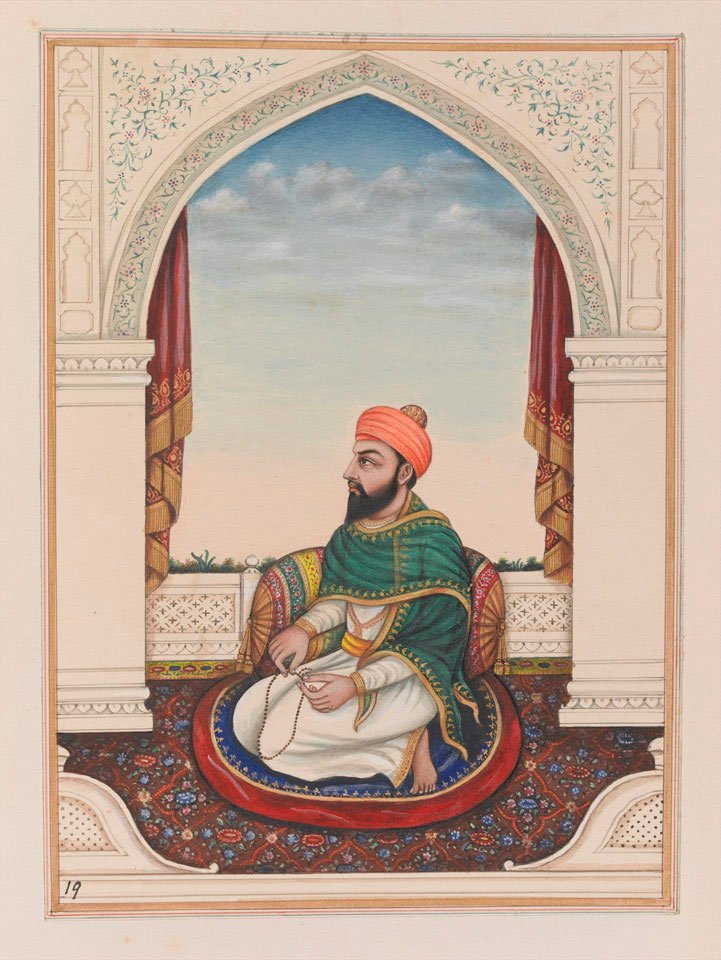
Fakir Azizuddin
1780 – 3 December 1845
The eldest son trained in medicine under Lala Hakim Rai and became Ranjit Singh’s personal physician when the Maharaja took Lahore. He drafted the court’s Persian state papers and, with his command of Arabic, Persian and English, became its leading envoy, remembered as his master’s mouthpiece.
1809Negotiations with Charles Metcalfe that led to the Treaty of Amritsar, signed on 25 April.
1813Secured Attock Fort for the Maharaja.
1831Interpreter at the Ropar meeting between Ranjit Singh and Lord William Bentinck.
1838Interpreter for the Maharaja with Lord Auckland, in the year of the Tripartite Treaty.
1842Met Lord Ellenborough at Firozpur on behalf of Maharaja Sher Singh.
After Ranjit Singh’s death he kept apart from the intrigues that divided the court, until his own death in Lahore.
The keys
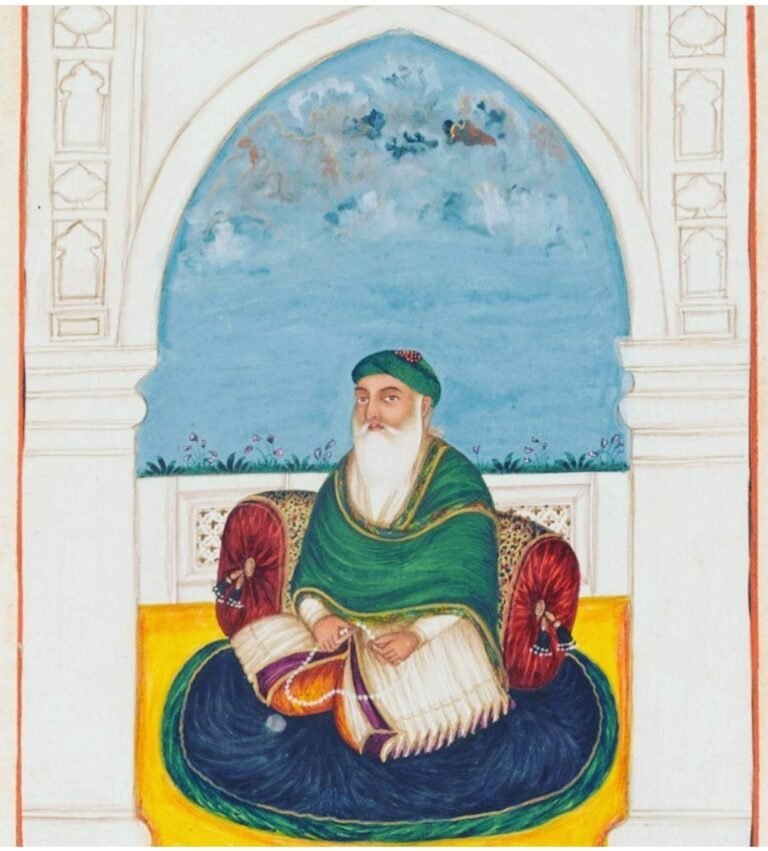
Fakir Imamuddin
Died 5 December 1847
The second son received the British envoy Charles Metcalfe on Ranjit Singh’s behalf in August 1808. He became qiladar, the keeper, of Gobindgarh Fort at Amritsar, where the state’s treasury, crown jewels and armoury were held.
The Encyclopaedia of Sikhism describes a wide charge: the treasury, the magazine, the arsenal and the studs, the fortifications of Amritsar and the reception of foreign visitors, with five hundred horse under his command. On his death in Lahore his only son, Taj ud-Din, succeeded him at the fort.
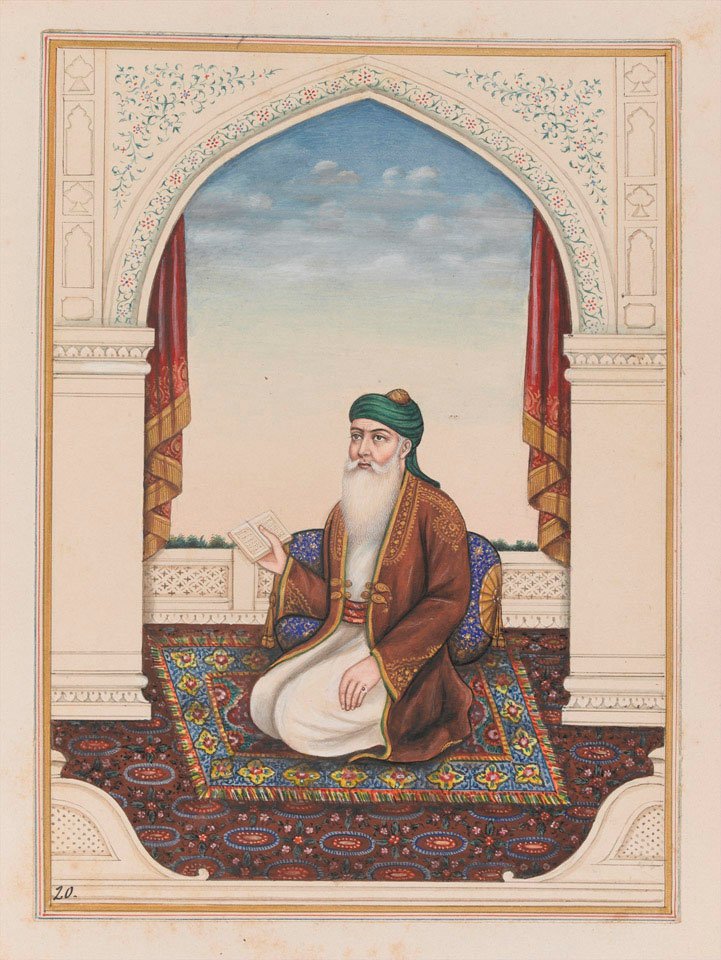
The seal
Fakir Nuruddin
c. 1789 – 26 March 1852
The youngest brother was appointed court hakim in 1801, with charge of Lahore’s dispensaries. In June 1810 he took Wazirabad; he went on to govern Gujrat and later had charge of the city of Lahore.
He signed the Treaty of Lahore in March 1846 and, from that December until annexation, sat on the Council of Regency for the young Maharaja Duleep Singh. Family accounts credit him with supervising the building of Ranjit Singh’s samadhi near the Roshnai Gate. He wrote Persian verse under the name ‘Munawwar’.
The brothers together
A cipher, gifts and a watch
The French naturalist Victor Jacquemont, who described the brothers in the 1830s, is recorded as noting their outward poverty, their command of Arabic medical texts, and a private cipher they used in their correspondence.
Ranjit Singh gave the family many of the objects that are still in the house. Others came from the British, among them gifts from Queen Victoria and a watch that the family records as Lord William Bentinck’s gift to Azizuddin in 1831.
After the court
The next generations
Nuruddin’s sons stayed close to the Sikh royal family. Zahur ud-Din (1824–1893) was Persian tutor to Duleep Singh at Fatehgarh. Qamar ud-Din (1826–1910) escorted Maharani Jind Kaur and later wrote a chronicle of Sikh rule.
In 1901 the family opened its house and collection to the public. According to an account published in 2017, Fakir Syed Jalaluddin listed the whole collection in 1937, in a handwritten inventory of 68 pages, and declared it a trust.
The historian F.S. Aijazuddin, a lineal descendant of Nuruddin, tells the brothers’ story in The Resourceful Fakirs: Three Muslim Brothers at the Sikh Court of Lahore (2014), drawing on the family’s own diaries and letters.
Today
Keeping the house
The family still cares for Fakir Khana, now through the Fakir Khana Trust. Fakir Syed Saif ud Din, who was born in the house and lives there, is the museum’s director and the Trust’s General Secretary, and has led its tours for many years.
In August 2004 Fakir Syed Iftikhar ud Din put the collection online in what the family describes as Pakistan’s pioneering e-museum. Faqir Syed Faisal ud Din, the Trust’s coordinator, now leads the next stage of that work.